


Hawai‘i NIL Bill SB 3263: Where Things Stand After Latest Legislative Movement

Hawai‘i’s debated Name, Image, and Likeness (NIL) bill — SB 3263 — has reached its most advanced stage yet, with lawmakers moving closer to establishing a formal NIL framework for University of Hawai‘i student-athletes.
After months of amendments across both chambers, the bill has now advanced as Conference Draft 1 (CD1), signaling that the House and Senate have reached a negotiated agreement on the final version.
What Passed on Friday (CD1 Explained)
The version that moved forward Friday is the conference committee draft, which is typically the final step before a bill is sent to the Governor.
At this stage:
- Both the House and Senate must vote to adopt the conference committee report (CCR)
- No further amendments are allowed
- If adopted, the bill is enrolled and sent to the Governor for signature or veto
In short: SB 3263 is essentially at the finish line.

Screenshot of House & Senate conference on Friday, May 1 streamed on the Senate YouTube Channel
From Concept to CD1: How the Bill Evolved
SB 3263 didn’t follow a straight path to this point.
Throughout the session, two different approaches to NIL emerged at the Legislature.
On the House side, HB 2384 emphasized building a broad NIL framework while proposing $5 million in more immediate funding to help the University of Hawai‘i stay competitive in a rapidly changing landscape.
The Senate’s version of SB 3263 took a different approach — focusing on a structured system built around an endowment, with detailed reporting requirements and long-term financial planning.
By the time the bill reached conference committee, the goal was no longer choosing one approach over the other. It was finding a way to combine them.
The result is CD1, a hybrid model that blends immediate support with a longer-term funding strategy.
The Headline Number — and the Reality Behind It
At the center of the bill is what’s been widely described as a $10 million NIL fund for UH athletics.
But that number needs context.
The endowment is built from three primary sources:
- $4 million transferred from UH tuition and fees special funds
- $2.5 million appropriated by the State
- $5 million in private matching funds to be raised
On paper, that totals $10 million. In practice, it operates very differently from a traditional spending pool.
What UH Can Actually Use Right Away
The most immediate funding comes from the state appropriation — but even that is partially restricted.
Of the $2.5 million from the State:
- $1 million must remain in the endowment as protected principal
- The remaining $1.5 million is not locked in the same way
That $1.5 million becomes the primary pool UH can use in the short term for NIL-related support.
This is a key distinction. While the bill is often framed around a $10 million figure, UH’s immediate flexibility is much closer to that $1.5 million number.
The Rest Is Built for the Long Term
The remaining funds — including the $4 million from UH and the anticipated $5 million in private contributions — are intended to build the core of the endowment.
Those dollars are not meant to be spent outright. Instead, they function as a long-term financial base.
The bill sets a threshold before UH can begin tapping into the fund more broadly:
- Once the endowment reaches at least $7.5 million
- And maintains that level for three consecutive years
UH can begin using investment earnings, rather than the principal itself, to support NIL compensation and related benefits.
This structure is designed to prevent the fund from being depleted quickly, while creating a more sustainable model over time.

The Bottom Line
SB 3263 has come a long way — not because it started as a simple NIL permission bill, but because the final version reflects a merging of two very different approaches from earlier in the session.
The House-side version, through HB 2384, focused more heavily on creating a broad NIL framework while giving UH $5 million in more immediate funding to help compete in the new athlete compensation landscape.
The Senate’s original SB 3263, meanwhile, leaned more toward a long-term endowment model, with detailed reporting requirements, transparency measures, and a more structured approach to how NIL activity would be tracked and administered.
The CD1 version now appears to blend both philosophies.
It gives UH some short-term flexibility — most notably the roughly $1.5 million that can be used sooner — while still building toward a protected NIL endowment intended to support athlete compensation over time.
So while the $10 million figure is the headline, the real story is how lawmakers settled on a compromise: not a fully immediate spending pool, and not only a long-term endowment, but a hybrid model designed to help UH now while attempting to create something sustainable for the future.
If the final votes go through, Hawai‘i will officially enter a new era of college athletics — with UH positioned to directly support student-athletes in a way the program has never done before.
Beyond the Funding: What Else CD1 Does
While the financial structure is the centerpiece, CD1 also formalizes how NIL activity will operate at UH.
The bill allows the university to enter into institutional NIL agreements, meaning UH can directly compensate student-athletes — a significant shift from past models that relied heavily on third-party deals.
It also requires athletes to disclose NIL agreements valued at $600 or more, giving the university visibility for compliance purposes.
At the same time, athletes are not required to hire agents or professional representation. They may choose to do so, but can also manage their own deals or work with trusted advisors.
The bill includes additional protections, including a 10-day window to rescind contracts, and requires UH to provide education on financial literacy, contracts, and taxes.
Because public funds are involved, it also mandates annual reporting to the Legislature and requires NIL activity to be administered in a manner consistent with Title IX.
What Happens Next
With CD1 approved in conference committee Friday, the process now moves to final votes in both chambers.
If the House and Senate adopt the conference committee report, SB 3263 will be sent to the Governor, who can sign it into law, veto it, or allow it to become law without a signature.
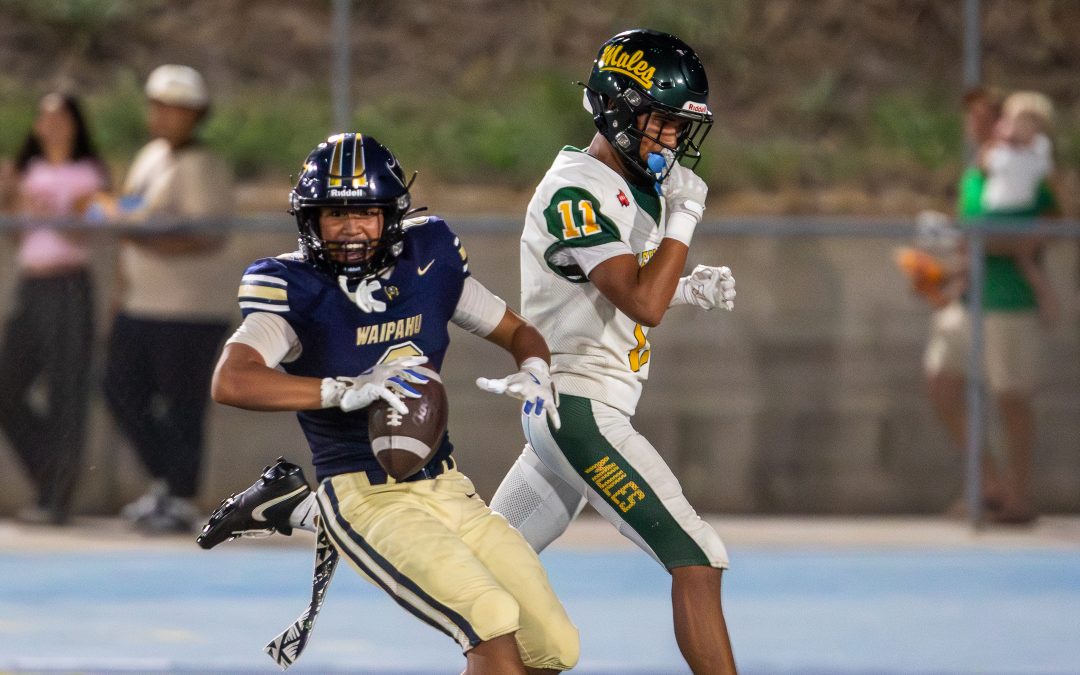
Defense, ground game leads Waipahu over Leilehua in season-opening win
Defense, ground game leads Waipahu over Leilehua in season-opening win BY PAUL BRECHT | HONOLULU PUBLISHED AUGUST 9, 2025 WAIPAHU – Welcome back, high school football. The Waipahu varsity football team used dynamic defensive performances and a...
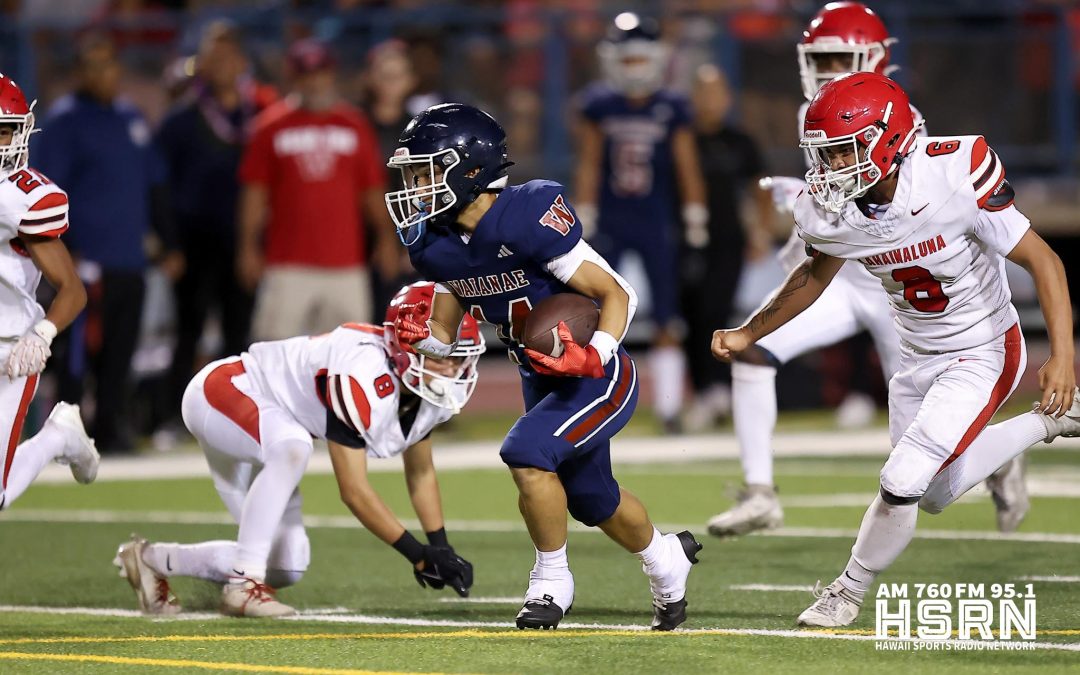
High School Football Gallery: Waiʻanae vs Lahainaluna August 8, 2025
Seariders power past Lahainaluna, 42-21, in 2025 season opener PHOTOS BY ANDREW LEEPUBLISHED AUGUST 9, 2025 SCORINGLIVE SCORING SUMMARY 1ST QUARTER WNAE Keonakoa Malaia, 6 yard pass from John Michael Kaio. (Shawdan Pacheco kick) WNAE Jaylum...

Q&A with new Castle head football coach Eric Stephens
Q&A with new Castle head football coach Eric Stephens BY MICHAEL LASQUERO | HSRNPUBLISHED AUGUST 6, 2025The standard is the standard. Eric Stephens is the new head coach at Castle High School, which is his first gig as the head man of a...

2025 Maui Interscholastic League Football Schedule
2025 Maui Interscholastic League Football Schedule BY HSRN STAFFPUBLISHED AUG 6, 2025 The Maui Interscholastic League (MIL) will use a double round-robin format for their regular season with teams playing each other twice, regardless of...
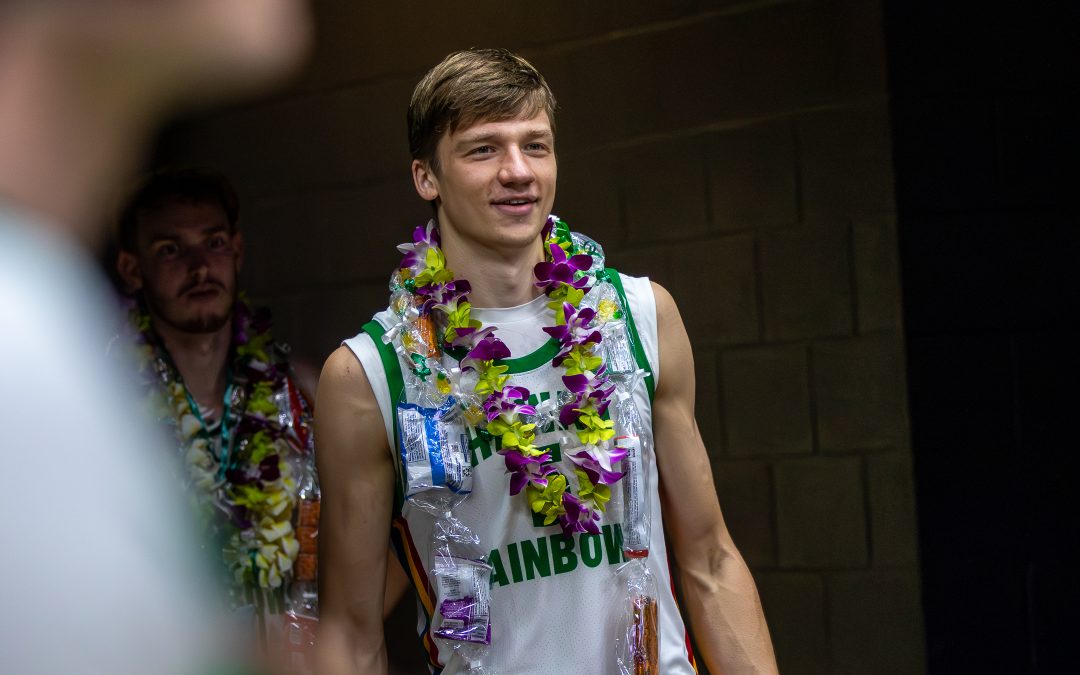
Hawaii secures Nemeikša return as “Nemo” caps strong class
Hawaii secures Nemeikša return as “Nemo” caps strong class BY PAUL BRECHT | HONOLULUPUBLISHED AUGUST 4, 2025HONOLULU – Guess who’s back? After entering the transfer portal back on April 16, University of Hawaii graduate forward Gytis Nemeikša...
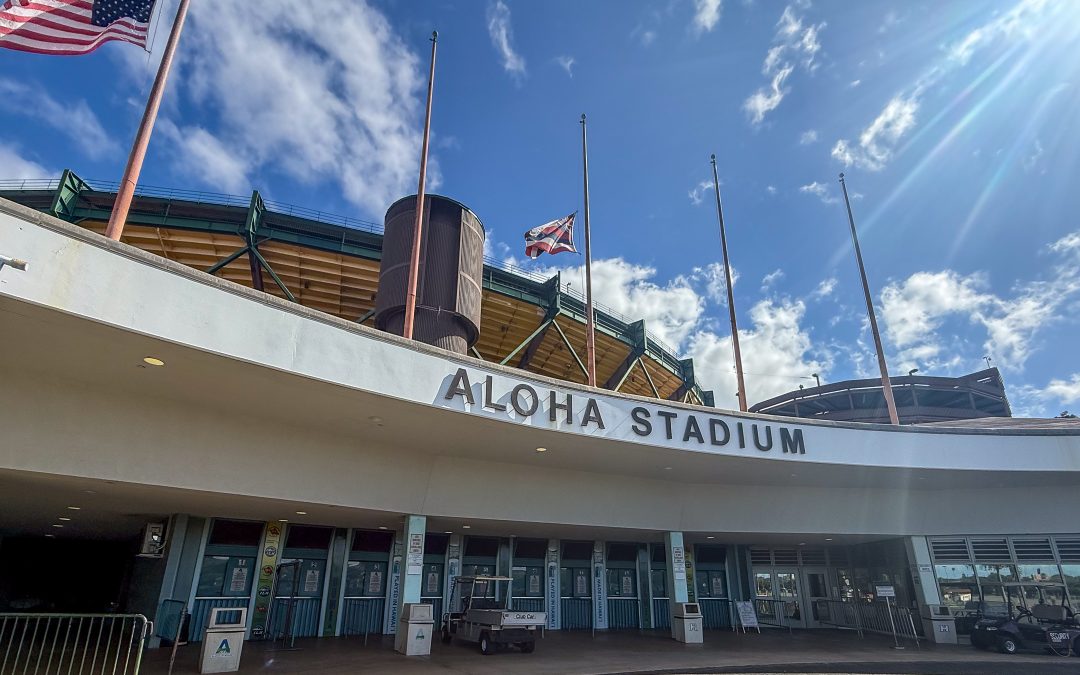
Stadium agreement expected to be signed within coming weeks as board welcomes new faces, new roles
Stadium agreement expected to be signed within coming weeks as board welcomes new faces, new roles BY MICHAEL LASQUERO | HSRNPUBLISHED JULY 31, 2025‘AIEA — Thursday’s Stadium Authority Board meeting was a new experience for some of those that were...
Elite UH safety named to college football showcase preseason watchlist
Elite UH safety named to college football showcase preseason watchlist BY PAUL BRECHT | HONOLULUPUBLISHED JULY 31, 2025HONOLULU – The pros have eyes on Hawaii. University of Hawaii safety Peter Manuma was named to the 2025 East-West Shrine Bowl...

2025 OIA Football: August Schedule
2025 OIA Football: August Schedule BY HSRN STAFFPUBLISHED JULY 28, 2025High school football leagues across the state are finalizing their schedules for the upcoming 2025 season and Hawai'i Sports Radio Network is here to keep you updated. In the...
Hawaii hopes heat helps early season preparation
Hawaii hopes heat helps early season preparation BY PAUL BRECHT | HONOLULUPUBLISHED JULY 27, 2025HONOLULU – Another fiery afternoon. The University of Hawaii football program made a slight shift to training camp’s practice schedule entering head...
Hawaii Football ’25 Training Camp: DC Dennis Thurman Media Scrum
Hawaii Football '25 Training Camp: DC Dennis Thurman Media Scrum BY PAUL BRECHT | HONOLULUPUBLISHED JULY 25, 2025HONOLULU - The 2025 Hawaii football training camp is underway, kicking off the second year of the Rainbow Warrior defense taking...