


Hawai‘i NIL Bill SB 3263: Where Things Stand After Latest Legislative Movement

Hawai‘i’s debated Name, Image, and Likeness (NIL) bill — SB 3263 — has reached its most advanced stage yet, with lawmakers moving closer to establishing a formal NIL framework for University of Hawai‘i student-athletes.
After months of amendments across both chambers, the bill has now advanced as Conference Draft 1 (CD1), signaling that the House and Senate have reached a negotiated agreement on the final version.
What Passed on Friday (CD1 Explained)
The version that moved forward Friday is the conference committee draft, which is typically the final step before a bill is sent to the Governor.
At this stage:
- Both the House and Senate must vote to adopt the conference committee report (CCR)
- No further amendments are allowed
- If adopted, the bill is enrolled and sent to the Governor for signature or veto
In short: SB 3263 is essentially at the finish line.

Screenshot of House & Senate conference on Friday, May 1 streamed on the Senate YouTube Channel
From Concept to CD1: How the Bill Evolved
SB 3263 didn’t follow a straight path to this point.
Throughout the session, two different approaches to NIL emerged at the Legislature.
On the House side, HB 2384 emphasized building a broad NIL framework while proposing $5 million in more immediate funding to help the University of Hawai‘i stay competitive in a rapidly changing landscape.
The Senate’s version of SB 3263 took a different approach — focusing on a structured system built around an endowment, with detailed reporting requirements and long-term financial planning.
By the time the bill reached conference committee, the goal was no longer choosing one approach over the other. It was finding a way to combine them.
The result is CD1, a hybrid model that blends immediate support with a longer-term funding strategy.
The Headline Number — and the Reality Behind It
At the center of the bill is what’s been widely described as a $10 million NIL fund for UH athletics.
But that number needs context.
The endowment is built from three primary sources:
- $4 million transferred from UH tuition and fees special funds
- $2.5 million appropriated by the State
- $5 million in private matching funds to be raised
On paper, that totals $10 million. In practice, it operates very differently from a traditional spending pool.
What UH Can Actually Use Right Away
The most immediate funding comes from the state appropriation — but even that is partially restricted.
Of the $2.5 million from the State:
- $1 million must remain in the endowment as protected principal
- The remaining $1.5 million is not locked in the same way
That $1.5 million becomes the primary pool UH can use in the short term for NIL-related support.
This is a key distinction. While the bill is often framed around a $10 million figure, UH’s immediate flexibility is much closer to that $1.5 million number.
The Rest Is Built for the Long Term
The remaining funds — including the $4 million from UH and the anticipated $5 million in private contributions — are intended to build the core of the endowment.
Those dollars are not meant to be spent outright. Instead, they function as a long-term financial base.
The bill sets a threshold before UH can begin tapping into the fund more broadly:
- Once the endowment reaches at least $7.5 million
- And maintains that level for three consecutive years
UH can begin using investment earnings, rather than the principal itself, to support NIL compensation and related benefits.
This structure is designed to prevent the fund from being depleted quickly, while creating a more sustainable model over time.

The Bottom Line
SB 3263 has come a long way — not because it started as a simple NIL permission bill, but because the final version reflects a merging of two very different approaches from earlier in the session.
The House-side version, through HB 2384, focused more heavily on creating a broad NIL framework while giving UH $5 million in more immediate funding to help compete in the new athlete compensation landscape.
The Senate’s original SB 3263, meanwhile, leaned more toward a long-term endowment model, with detailed reporting requirements, transparency measures, and a more structured approach to how NIL activity would be tracked and administered.
The CD1 version now appears to blend both philosophies.
It gives UH some short-term flexibility — most notably the roughly $1.5 million that can be used sooner — while still building toward a protected NIL endowment intended to support athlete compensation over time.
So while the $10 million figure is the headline, the real story is how lawmakers settled on a compromise: not a fully immediate spending pool, and not only a long-term endowment, but a hybrid model designed to help UH now while attempting to create something sustainable for the future.
If the final votes go through, Hawai‘i will officially enter a new era of college athletics — with UH positioned to directly support student-athletes in a way the program has never done before.
Beyond the Funding: What Else CD1 Does
While the financial structure is the centerpiece, CD1 also formalizes how NIL activity will operate at UH.
The bill allows the university to enter into institutional NIL agreements, meaning UH can directly compensate student-athletes — a significant shift from past models that relied heavily on third-party deals.
It also requires athletes to disclose NIL agreements valued at $600 or more, giving the university visibility for compliance purposes.
At the same time, athletes are not required to hire agents or professional representation. They may choose to do so, but can also manage their own deals or work with trusted advisors.
The bill includes additional protections, including a 10-day window to rescind contracts, and requires UH to provide education on financial literacy, contracts, and taxes.
Because public funds are involved, it also mandates annual reporting to the Legislature and requires NIL activity to be administered in a manner consistent with Title IX.
What Happens Next
With CD1 approved in conference committee Friday, the process now moves to final votes in both chambers.
If the House and Senate adopt the conference committee report, SB 3263 will be sent to the Governor, who can sign it into law, veto it, or allow it to become law without a signature.
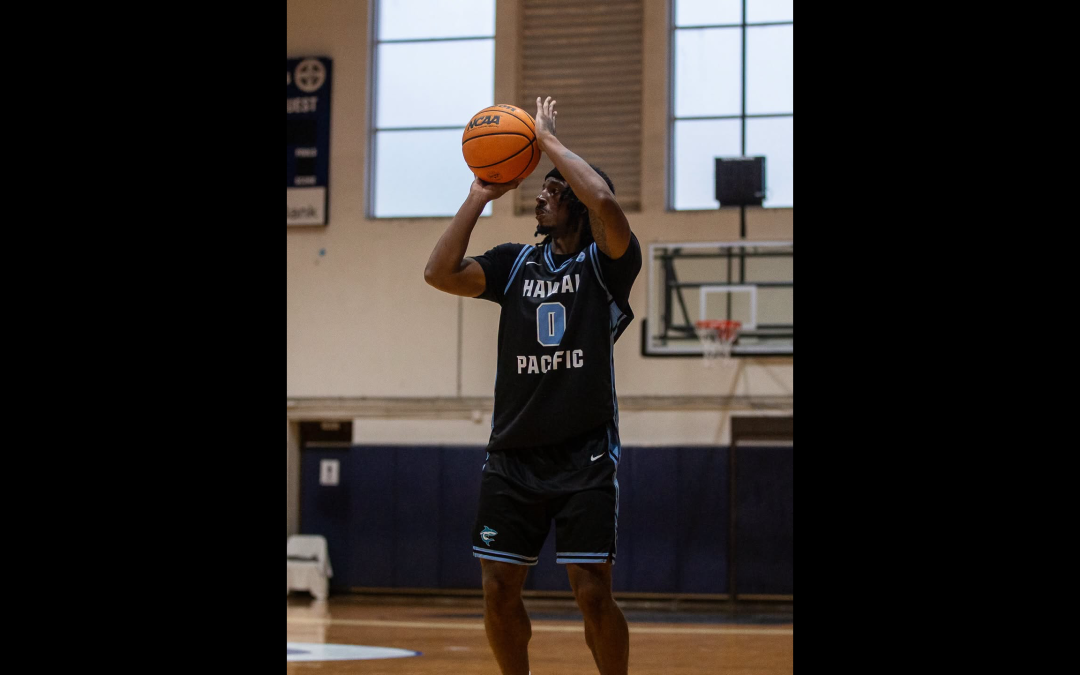
Lake Erie (OH) holds off Hawaii Pacific to take third in Hoops in Hawaii Tip-Off Classic
HONOLULU – Close but no cigar. For the second consecutive night, the Hawaii Pacific University men’s basketball team took a tough opponent down to the wire before falling short in regulation as Lake Erie (OH) used a high-pressure defense and clutch...
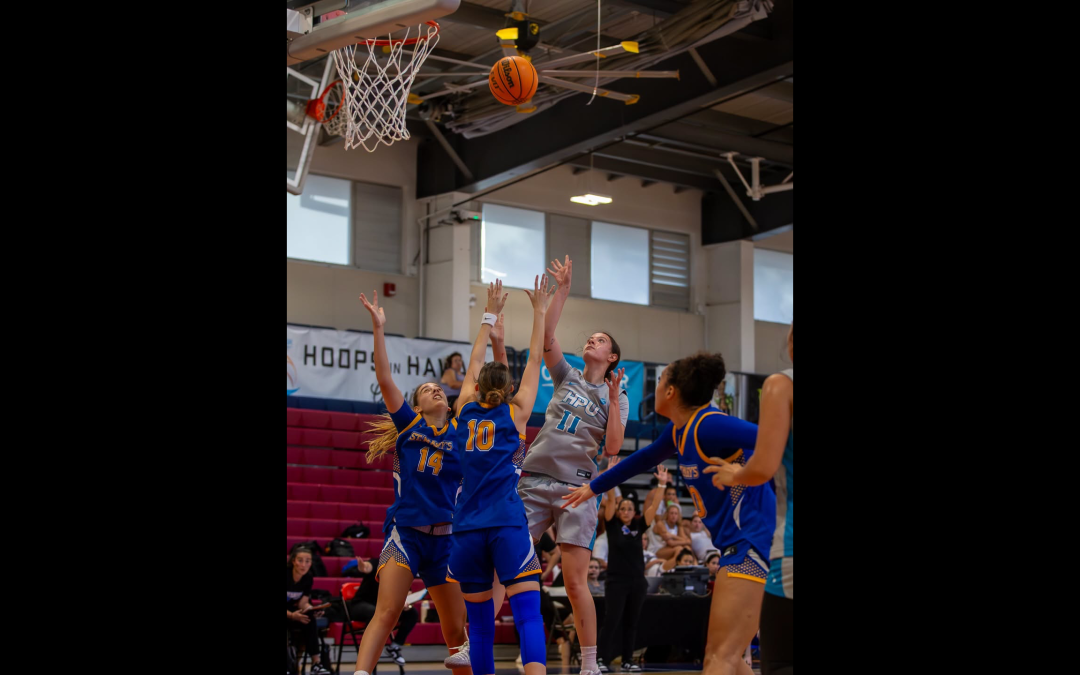
Hawaii Pacific falls to St. Mary’s (TX) in Hoops in Hawaii Tip-Off third-place game
HONOLULU – Fought hard, fell short but found plenty of positives. Playing for the third time in three days, the Hawaii Pacific University women’s basketball team ran out of energy in the Hoops in Hawaii Tip-Off Classic third-place game as they fell...
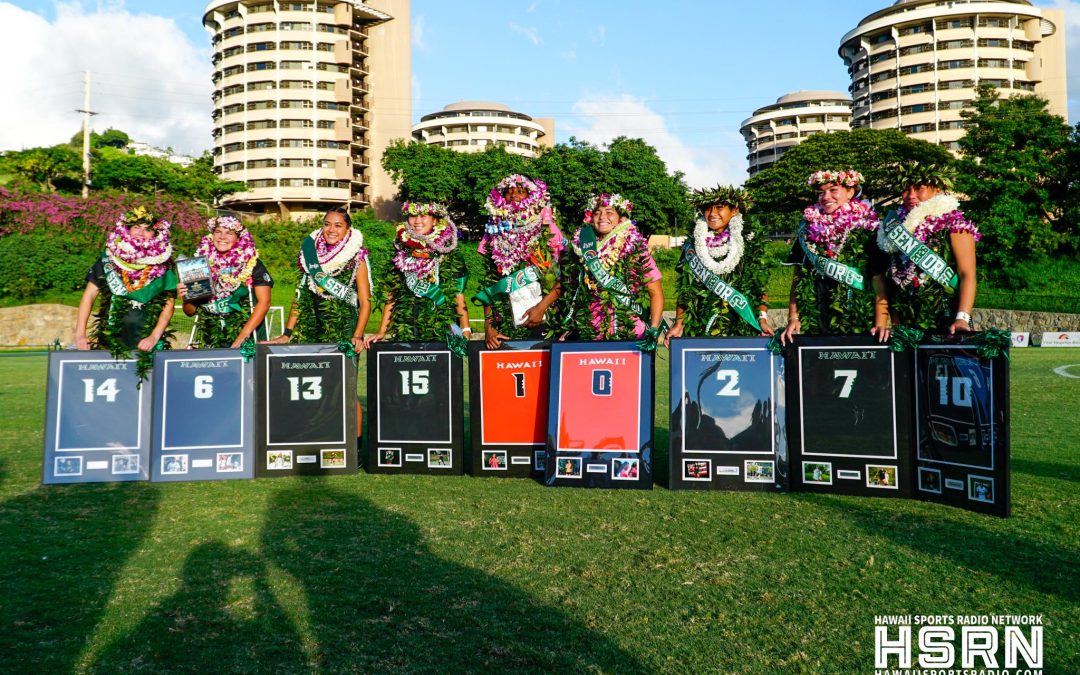
Hawai’i clinches playoff spot with Senior Day draw against New Mexico
HONOLULU – They certainly didn’t make it easy. The University of Hawai’i women’s soccer team clinched a spot in the Mountain West tournament on Sunday, playing New Mexico (8-4-4, 5-2-2 Mountain West) to a 2-2 draw at the Lower Campus Field on...
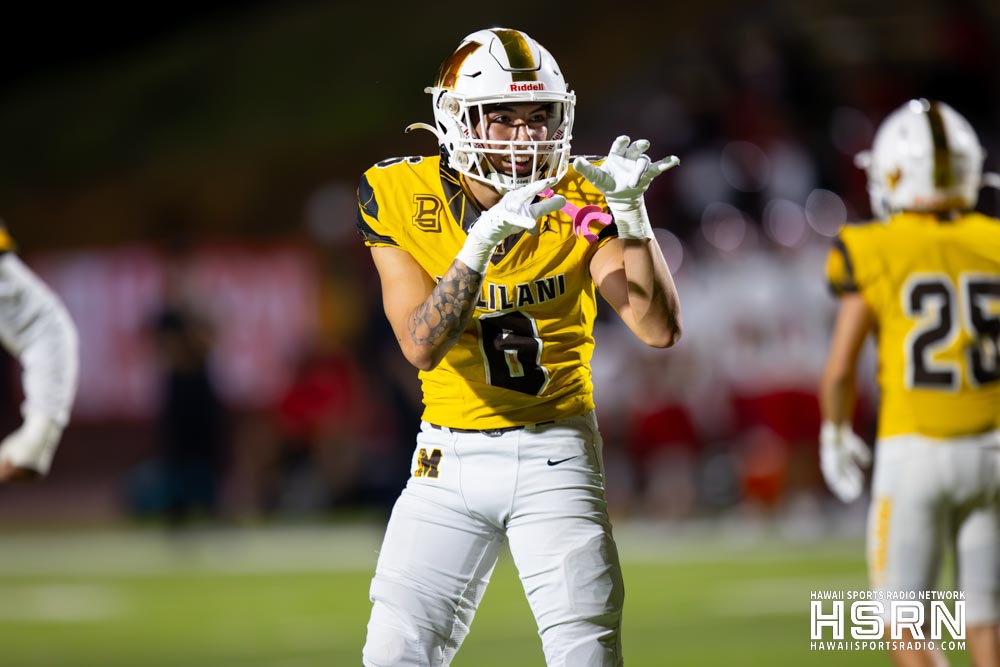
Mililani Knocks Off Defending Champion Kahuku, Advances to OIA Open Division Final
Mililani's Bless Cabrera-Hopkins (6) celebrates after getting a first down during a High School Football Game against Kahuku on Friday, October 30, 2026, at Mililani High School in Mililani, Hawaii. | Photo Credit: Andrew Lee, Special to...
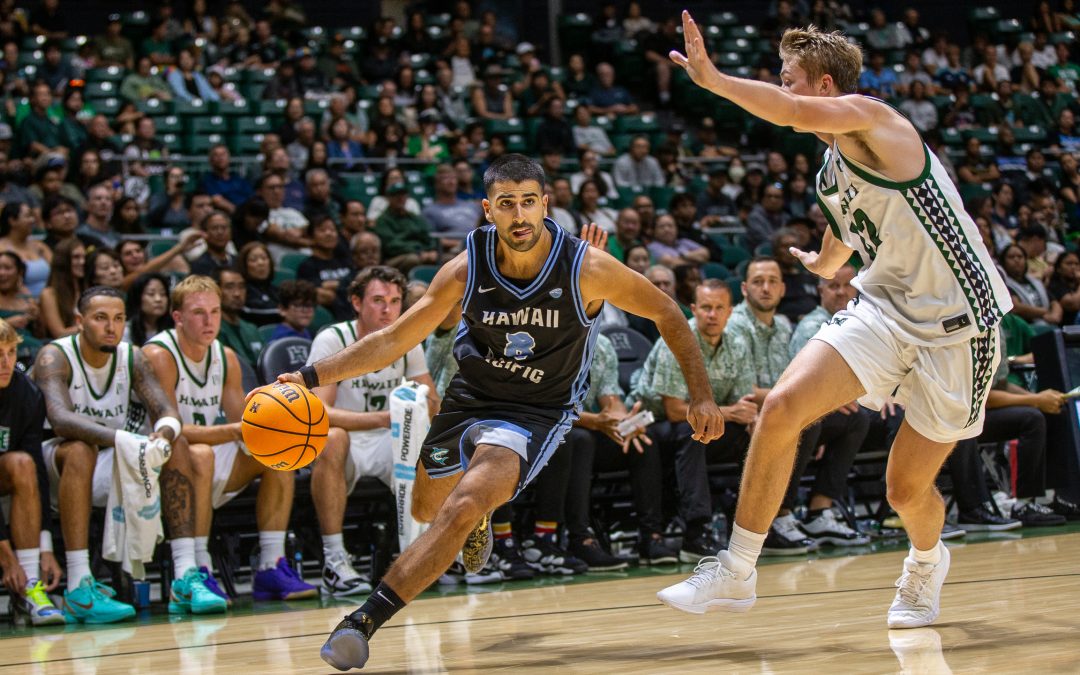
Sizzling shooting display helps Hawaii Pacific to blowout win over St. Edwards
HONOLULU – Welcome to the Splash Zone. Behind a blistering first half of long-range shooting and suffocating defensive showing, the Hawaii Pacific University men’s basketball team cruised to an 88-64 victory over St. Edwards (TX) on Friday morning...
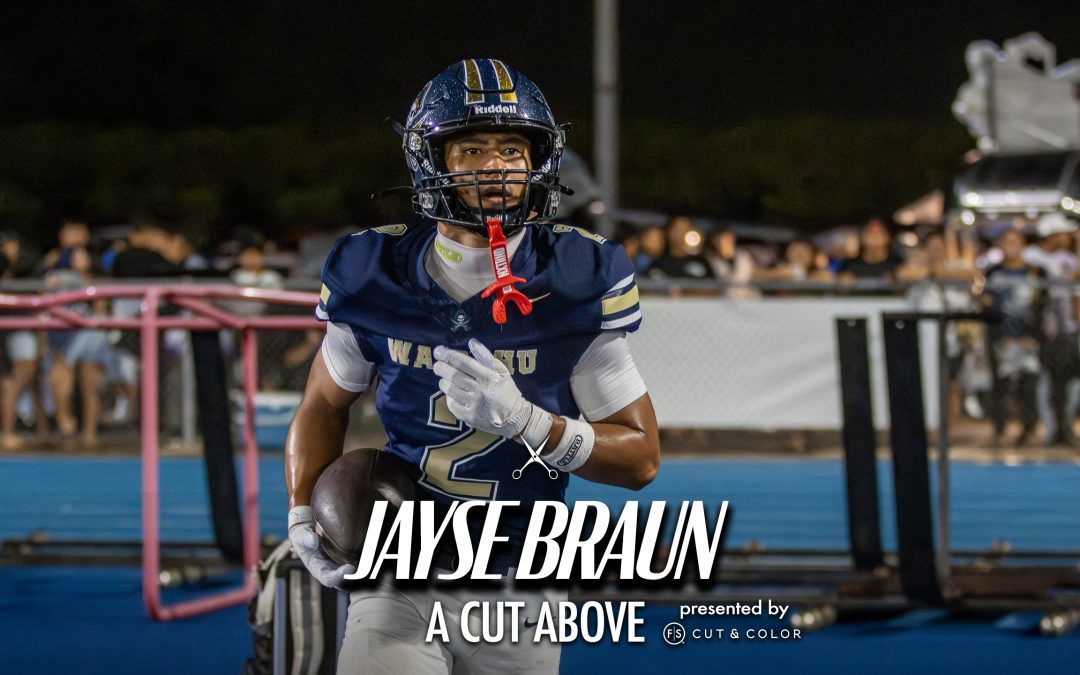
Humble off the field, Waipahu’s Braun lets his play do the talking
There isn't much about Jayse Braun's demeanor that would suggest he's one of the most dangerous offensive weapons in Hawai‘i high school football — until he leaves defenders chasing after him in the end zone. At 5-foot-10 and 165 pounds, the...
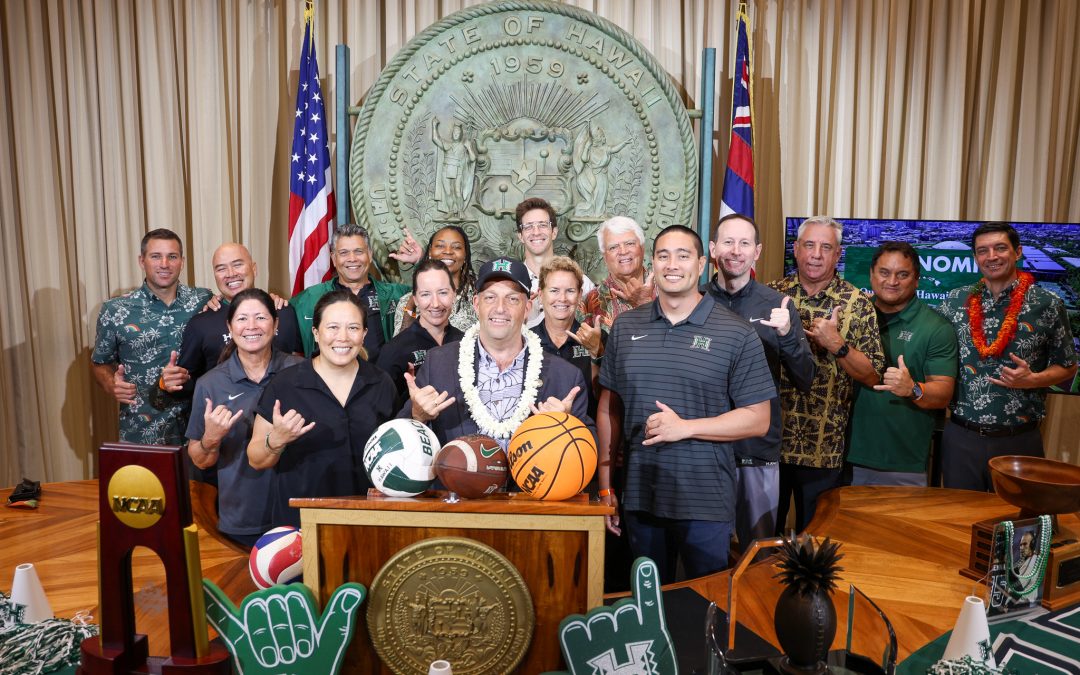
UH Athletics Generates $753 Million in Economic Impact, $1.73 Billion in Media Exposure Value
Photo courtesy of the Office of Governor Josh GreenNew study highlights the university's economic contributions as state and business leaders call for continued investment in Hawai‘i Athletics.HONOLULU — The University of Hawai‘i at Mānoa...
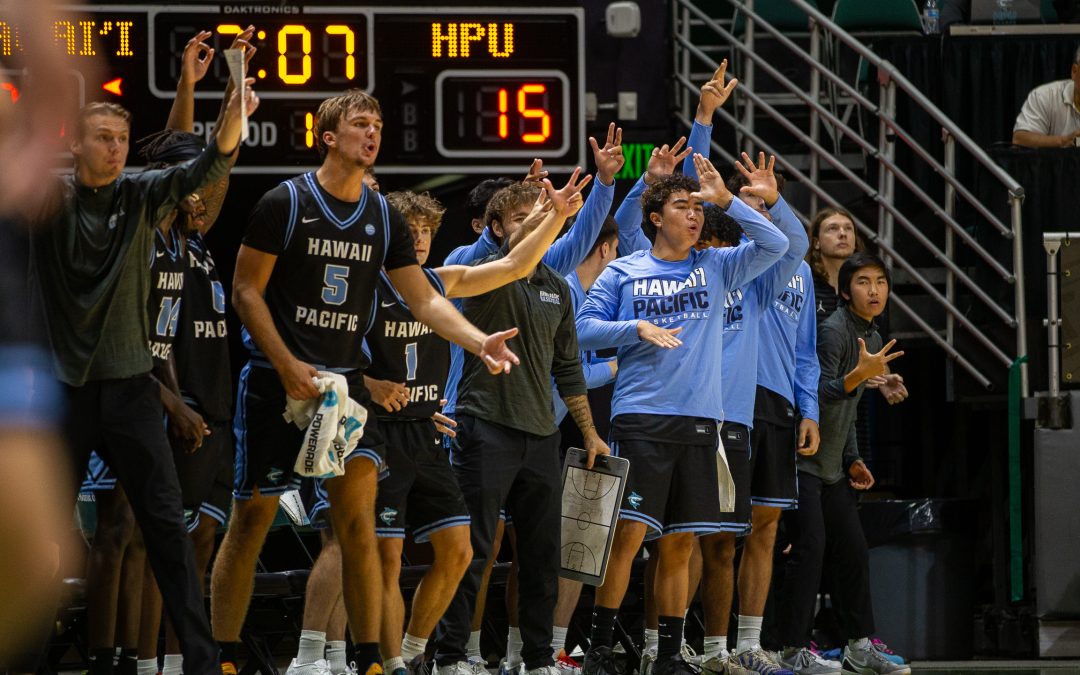
Hawaii Pacific hopes to take next step despite plethora of new players
HONOLULU – Progress is not always linear, but it can be. Coming off the program’s first trip to the NCAA Tournament in nearly a decade, the Hawaii Pacific University men’s basketball team enters 2026-27 with a roster filled with fresh faces. After...

Football World Remembers June Jones: Tributes Pour In for Legendary Hawai‘i Coach
The football community is mourning the loss of legendary coach June Jones, whose impact on the University of Hawai‘i and the game of football extended far beyond the sidelines. Jones, who died at the age of 73, transformed the Rainbow Warrior...
Molokai’s Jordyn McCutcheon went Rogue and became a record-setter
HONOLULU – College decisions can be hard, especially in Hawai’i. Plenty of students think they want to leave the islands after high school. Tons of others want nothing more than to attend one of the prestigious colleges located in their home state...