HB 2384 Advances Through CPC/JHA After Tough Questions on Direct NIL Payments

HB 2384 Advances Through CPC/JHA After Tough Questions on Direct NIL Payments

HB 2384 Advances Through CPC/JHA After Tough Questions on Direct NIL Payments

BY HSRN STAFF | HONOLULU
PUBLISHED FEBRUARY 19, 2026

HONOLULU — One week after an emotional on-campus hearing at UH Mānoa, HB 2384 returned to the Capitol — and this time, the tone shifted.

The House Committee on Consumer Protection & Commerce (CPC) and Judiciary & Hawaiian Affairs (JHA) held a joint hearing Thursday on HB 2384 HD1, the bill establishing a framework for Name, Image and Likeness (NIL) at the University of Hawai‘i Mānoa.

Unlike last week’s testimony-heavy session filled with student-athletes and coaches, this hearing centered on structure, funding mechanics and whether public dollars should be used for direct NIL payments.

By the end of the afternoon, the bill passed out of committee as an HD2 with amendments, moving it forward to Finance.

The Core Question: Public Dollars for Direct NIL?

UH Athletics Director Matt Elliott reiterated that NIL is now part of modern college athletics and that as of July 1, institutions are permitted to engage in direct NIL relationships with student-athletes.

But lawmakers pressed on how Hawai‘i plans to fund it.

Rep. Kim Coco Iwamoto raised one of the sharpest questions of the afternoon, asking:

“What makes the actors of the performing arts students at UH different than the athletic students at UH in terms of helping them, giving them resources, such as direct payment?”

Her concern centered on equity — whether allocating taxpayer dollars directly to athletes separates them from other UH students whose names, images or intellectual property may also benefit the university.

Later, during decision-making, she made her position clear:

“I will be voting no based on what we heard here today that other states are not directly funding NIL.”

She added that she was not comfortable prioritizing direct NIL payments “when there are so many other needs right now in our state”.

Iwamoto cast the lone “No” vote in CPC.

Chair Matayoshi: Supportive of Guardrails, Cautious on Structure

CPC Chair Scot Z. Matayoshi did not oppose the bill outright, but repeatedly questioned the funding model.

He emphasized that he supports the regulatory and educational aspects of the bill — including stronger financial literacy and agent oversight.

“I do really appreciate that part… requiring the University of Hawaii to set forth policies to give more financial literacy, tax information, financial management, agent representation. I think that’s all great.”

However, he expressed discomfort with the state directly appropriating $5 million for NIL payments.

“I am uncomfortable spending public taxpayer dollars to go directly to student athletes in that sense.”

He also questioned why Hawai‘i was structuring payments differently than other states, asking:

“Why are we doing $5 million to be directly given to student athletes?”

In response, Elliott explained that while some states are supplementing athletic department budgets broadly, Hawai‘i’s proposal makes the NIL allocation explicit to provide transparency.

Ultimately, Matayoshi recommended passing the bill with amendments to clarify in the language that the allocated funds would be used for direct NIL payments — ensuring that the Finance Committee reviews that structure carefully.

Judiciary Focus: Athlete Protections

On the JHA side, members focused less on the funding structure and more on policy safeguards.

Questions centered on whether the bill strengthens institutional policies, protects student-athlete rights and ensures transparency without invading privacy.

Elliott confirmed that while UH is already engaging in NIL relationships, the bill would require more comprehensive and formalized policies than currently exist.

JHA ultimately passed the measure with amendments.


Vote Breakdown – Feb. 19

Judiciary & Hawaiian Affairs (JHA)

✔️ Passed with amendments

  • 9 Ayes: Tarnas, Poepoe, Belatti, Kahaloa, Sayama, Takayama, Shimizu

  • Ayes with Reservations: Cochran, Garcia

  • Noes: None

  • Excused: Hashem

Consumer Protection & Commerce (CPC)

✔️ Passed with amendments

  • 5 Ayes: Matayoshi, Grandinetti, Chun, Ilagan, Kong

  • Noes: Iwamoto

  • Excused: Ichiyama, Lowen, Marten, Tam, Pierick


What This Means Going Forward

As HB 2384 advances to the House Finance Committee, the regulatory NIL framework appears to have gained traction, while the proposed $5 million direct public funding model remains under closer scrutiny. Finance will now evaluate the fiscal structure and determine how — and whether — the appropriation should move forward.


Hawai‘i Looks to Build Momentum Against UTEP Following Bye Week

Hawai‘i Looks to Build Momentum Against UTEP Following Bye Week

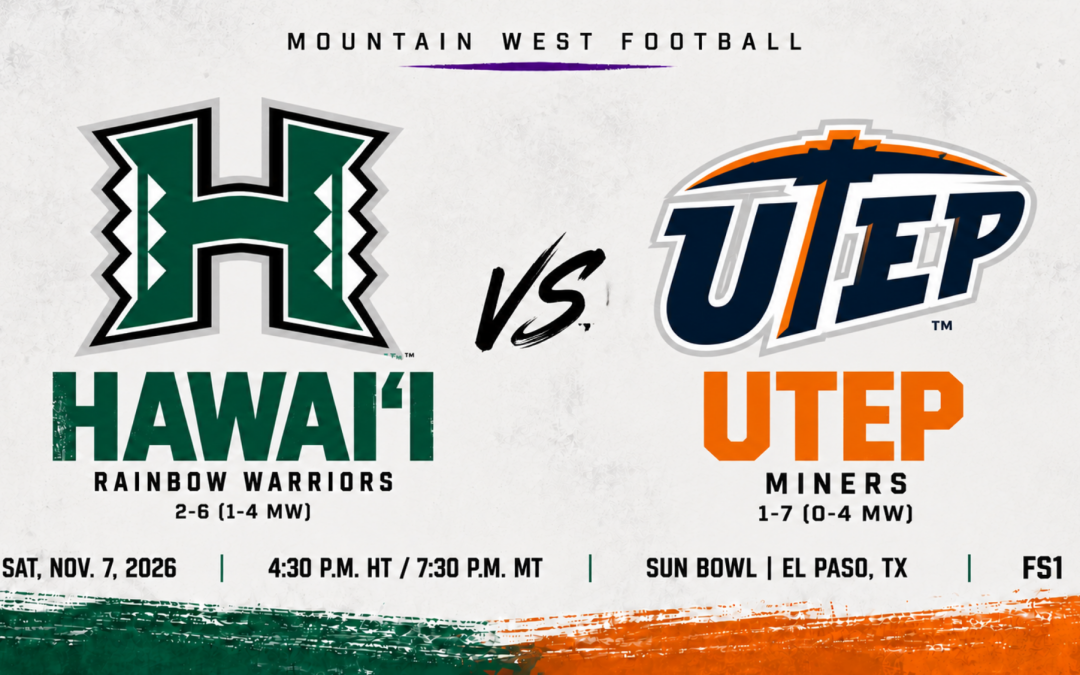
Rainbow Warriors seek consecutive wins for the first time this season as former WAC rivals meet for the first time in 22 yearsComing off its most complete performance of the season and a much-needed bye week, Hawai‘i returns to action Saturday...
Matingou magic helps Hawai’i hold on late against Seattle

Matingou magic helps Hawai’i hold on late against Seattle

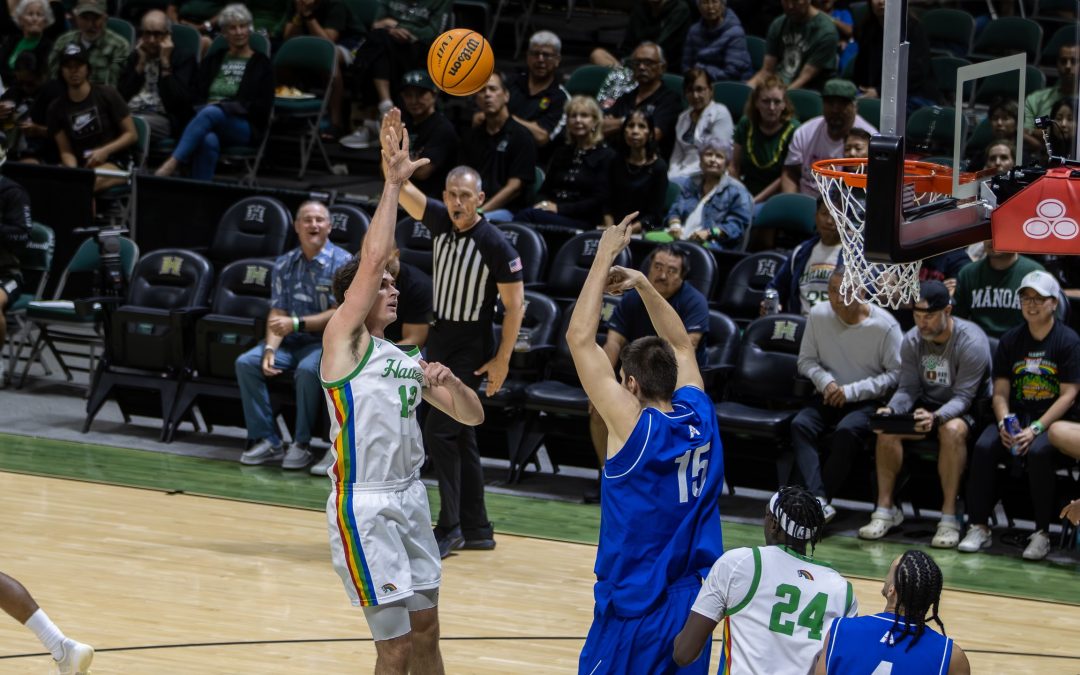
HONOLULU – What a way to end college basketball’s opening day. After seeing a 16-point lead evaporate and falling behind for the first time all game late, the University of Hawai’i men’s basketball team sent fans home happy on Monday night as Jaden...
ADVERTISEMENT

UH’s Voice on NIL: House Advances HB 2384 Following Campus Hearing

UH’s Voice on NIL: House Advances HB 2384 Following Campus Hearing

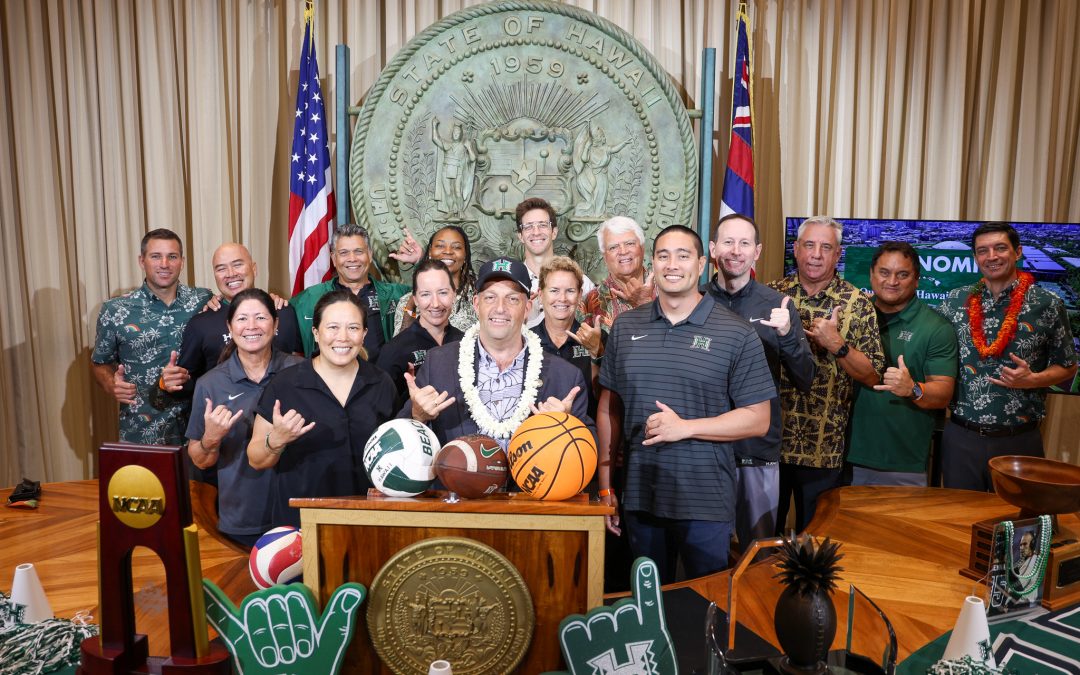
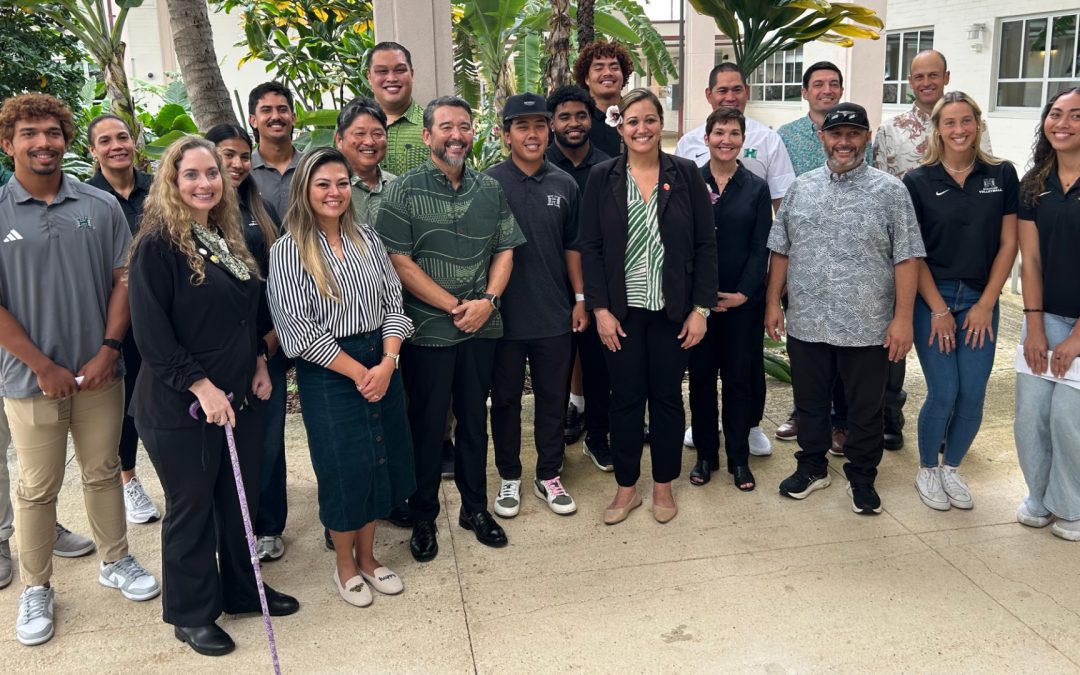
House lawmakers pose with UH Athletics Director Matt Elliott, President Wendy Hensel, coaches and student-athletes following an on-campus hearing for HB 2384, a bill addressing NIL and the future of UH Athletics.

UH’s Voice on NIL: House Advances HB 2384 Following Campus Hearing

BY HSRN STAFF | HONOLULU
PUBLISHED FEBRUARY 12, 2026

MĀNOA — The conversation around Name, Image and Likeness (NIL) moved forward Wednesday afternoon — and this time, it happened on campus.

The Hawai‘i House Committee on Higher Education held its hearing on HB 2384 inside Bachman Hall at the University of Hawai‘i at Mānoa, bringing lawmakers face-to-face with the student-athletes and coaches most impacted by the bill.

By the end of the hearing, the committee voted to pass the measure as an amended HD1, keeping the appropriation blank to allow further discussion.

But beyond the vote, the day was defined by testimony — and the urgency behind it.


What HB 2384 Does

HB 2384 would:

  • Affirm student-athletes’ rights to earn compensation through NIL

  • Require UH to adopt NIL policies aligned with federal law and Title IX

  • Establish reporting and transparency standards

  • Provide education and protection for student-athletes

  • Appropriate funding (amount to be finalized)

  • Sunset in 2030

The bill addresses both regulatory structure and potential state funding support for NIL programs.

“This Is the New Normal”

UH Athletics Director Matt Elliott made clear that this conversation is about adapting — not reacting.

He told lawmakers that every Mountain West Conference school now has an NIL budget and that NIL discussions are happening during official recruiting visits. He emphasized that NIL “is here” and that Hawai‘i must create a plan rather than risk falling behind.

Elliott explained that UH is currently raising private funds for this fiscal year (July 1, 2025 – June 30, 2026) and has requested $5 million for the 2026–27 fiscal year to provide stability and certainty in recruiting and retention. The goal, he said, is to run a balanced budget while ensuring UH can compete in the evolving landscape.

Student-Athletes: Pride, Culture and Staying Home

Much of the hearing’s impact came from the student-athletes themselves.

Wahine basketball guard Jovi Lefotu described UH athletics as representing “home, the Polynesian culture and the community,” explaining how the support she received while recovering from two ACL injuries reinforced why she chose to stay in Hawai‘i. She said knowing the community invests in their journey gives athletes confidence to deliver championships for the state.

UH quarterback Micah Alejado spoke about the pride that comes with “putting the H on the chest,” noting that culture is the most important foundation programs can build in today’s college environment. At the same time, he acknowledged that “the college landscape is changing” and that programs must adjust accordingly.

Baseball infielder Elijah Ickes addressed the realities of the transfer portal, explaining how difficult it is to build long-term chemistry when teammates leave after a year. He said the goal is to retain players, build bonds and ultimately compete at the highest level.

For many athletes, NIL wasn’t framed as “extra money,” but as a tool that helps Hawai‘i retain local talent and stay competitive nationally.

Coaches: Opportunity Must Continue

Head football coach Timmy Chang tied the bill directly to recruiting and retention, telling lawmakers that in recruiting and building culture, HB 2384 is important to sustaining the program’s momentum.

Rainbow Wahine volleyball head coach and former UH setter Robyn Ah Mow spoke emotionally about how UH athletics changed her life and opened doors she otherwise would not have had. She told lawmakers that college athletics is different now and that Hawai‘i must remain competitive to continue offering those same opportunities to future generations.

Former UH football player Mike Iosua provided perspective from both eras of college sports, noting that in the past athletes couldn’t accept even minor benefits without NCAA violations. Today, he said, NIL is no longer a “nice to have,” but a “must have” in order to remain competitive.

Lawmakers Frame It as Investment

Committee Chair Rep. Andrew Takuya Garrett said the decision to hold the hearing on campus was intentional, allowing lawmakers to hear directly from student-athletes and coaches.

While acknowledging concerns about taxpayer dollars, Garrett described the proposal as an investment that brings a return to the community.

Several members noted that UH Athletics serves as Hawai‘i’s only Division I program and plays a role in workforce development, community pride and economic impact.


How This Fits With SB 3263

HB 2384 is not the only NIL measure moving through the Legislature this session.

The Senate is advancing SB 3263, which also addresses student-athlete NIL rights and oversight, though with structural differences in funding mechanisms and reporting requirements. Lawmakers have indicated that both bills will likely continue through the process before being reconciled later in session.

For a deeper breakdown comparing HB 2384 and SB 3263 side-by-side, read our full comparison post here.


What Happens Next

HB 2384 now advances through the legislative process, with further hearings and potential crossover to the Senate ahead.

Funding details and the effective date will likely be addressed in later stages of the session.

What Wednesday made clear is that for student-athletes, coaches and administrators, NIL is no longer theoretical. It is part of daily recruiting, retention and roster decisions.

As Elliott put it, the goal is not to overspend or chase trends, but to create a responsible, transparent framework that allows UH to compete while protecting its athletes.

The debate now shifts to the broader Legislature — but at Mānoa, the message was consistent:

Hawai‘i wants to compete.

And it wants to do so together.

Hawai‘i Looks to Build Momentum Against UTEP Following Bye Week

Hawai‘i Looks to Build Momentum Against UTEP Following Bye Week

Rainbow Warriors seek consecutive wins for the first time this season as former WAC rivals meet for the first time in 22 yearsComing off its most complete performance of the season and a much-needed bye week, Hawai‘i returns to action Saturday...

Matingou magic helps Hawai’i hold on late against Seattle

Matingou magic helps Hawai’i hold on late against Seattle

HONOLULU – What a way to end college basketball’s opening day. After seeing a 16-point lead evaporate and falling behind for the first time all game late, the University of Hawai’i men’s basketball team sent fans home happy on Monday night as Jaden...

ADVERTISEMENT

UH Athletics NIL Endowment bill passes first Senate hearing

UH Athletics NIL Endowment bill passes first Senate hearing

UH Athletics NIL Endowment bill passes first Senate hearing

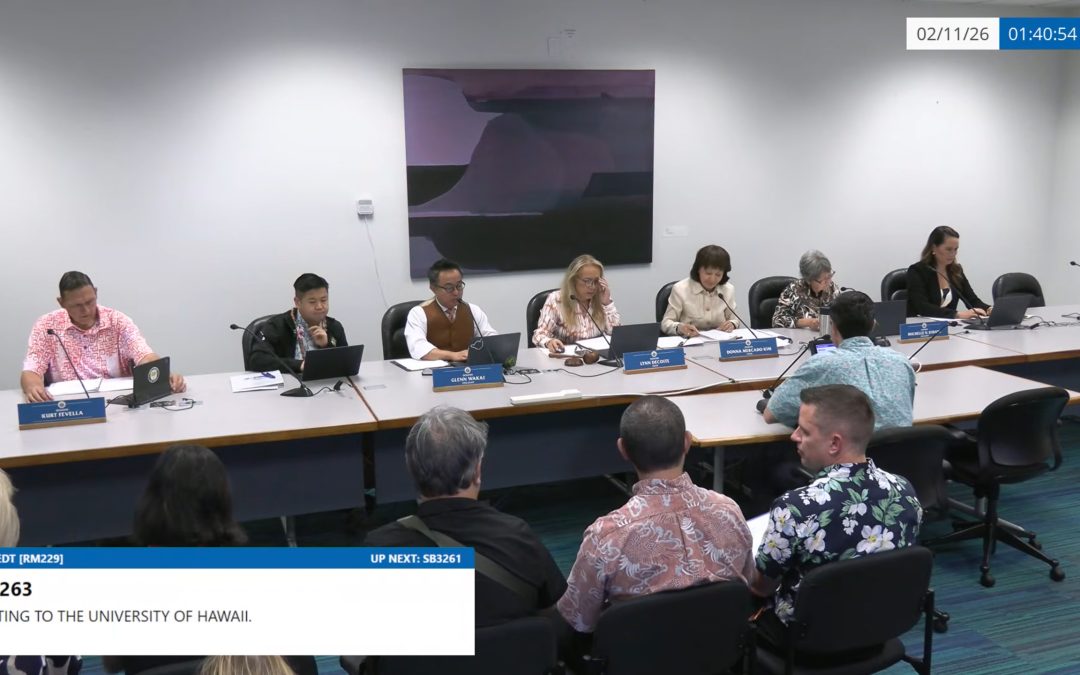
A bill that would establish an endowment fund to pay University of Hawaii student-athletes is moving forward in the Senate. | Photo: Hawai’i State Senate (YouTube Channel)

A bill that would establish an endowment fund to pay student-athletes at the University of Hawai’i at Manoa is moving forward in the Hawai’i Senate after passing its first committee hearing with amendments on Wednesday.

Senate Bill 3263 would establish a Name, Image and Likeness (NIL) endowment fund administered by the university to compensate student-athletes. The endowment would consist of funds appropriated by the legislature that would be equivalent to monies raised by the university to create this principal investment. The annual interest accrued in this endowment would then be used to pay the university’s student-athletes.

The endowment fund amount listed in the original measure is $10 million. The bill also requires the university to publicly report how much a student-athlete is getting paid from the endowment fund. Athletes that are paid through this fund would also have to use a registered agent.

The creation of SB 3263 by Senate lawmakers is in response to a part of the university’s operating budget request for fiscal year 2026-27. The university’s athletic department was seeking over $15 million in additional general funds to maintain competitiveness at the NCAA Division-I level, with $5 million going towards establishing a NIL program to attract and retain top talent.

“This bill is our bill that was introduced,” said Senate Education Chairwoman Donna Mercado Kim. “It was done so that there would be a pot of money that would be consistent over the years. It would be a one-time $5 million and the requirement is (the university) would match the $5 million so there would be $10 million in the corpus (principal) and then they would get the interest from that going forward as long as there is such a thing as NIL.”

Beginning in July 2021, college athletes were granted the ability by the NCAA to legally earn money through the likes of third-party endorsement deals. The landscape of college athletics changed again in 2025 after the House v. NCAA Settlement gave institutions the ability to pay athletes directly through what is known as revenue sharing.

That went into effect on July 1, 2025 — one day after Matt Elliott started as the athletics director at the university. Elliott was on hand at the state capitol Wednesday to testify in support of SB 3263 before the Senate committee on Education and committee on Economic Development and Tourism.

“We are in support of SB 3263,” Elliott said. “NIL is a new challenge for college athletics across the country and in this state. We believe it requires a range of solutions to be able to successfully take this on.”

While the university is seeking funds for to be able to use in the short-term, Elliott highlighted the bill’s effort to provide some long-term funding stability for the NIL program.

“This endowment program that is outline in this bill, we think makes a lot of sense because not only does it allow us to emphasize the importance of keeping up with the current athletics landscape, but it creates a long-term sustainable solution as well. While we still do believe that it’s important to have immediate short-term funding, this endowment is something that makes a lot of sense for us in the future.”

The main point of discussion for most of Wednesday’s hearing was the $10 million dollar amount in the original language of the bill. In order for the university to see this fund, it would need to raise $5 million on its own before the legislature matched that amount with taxpayer money.

Elliott requested that the endowment started at a lower amount to give the university time to raise funds to match what the legislature would appropriate.

Sen. Samantha DeCorte criticized this ask and called it “contradictory” because it appears that the university is asking taxpayers to front the cost of the endowment fund.

“Instead of giving us a plan on how you folks are going to be raising funds in an urgent way, you’re asking us to scale back on the threshold,” DeCorte said.

Elliott noted that the NIL endowment introduced with SB 3263 is a new potential source of funds for the future and that the university is trying to raise $3 million for the NIL program in the current fiscal year. (He confirmed later in the day that the university has raised $1.6 million already towards that amount.)

“We’ve been trying to raise money to pay our obligations real time, so those are the conversations — that’s the kind of fundraising we’re doing right now,” Elliott said.

“This is a different concept. This is a concept of raising money for an endowment. So to talk to donors now about asking money from the private sector to put in an endowment that will then generate some interest, that is something new. This is a new proposal this is coming in this bill.”

To push the bill forward, Kim recommended that the $10 million amount in SB 3263’s original language be “blanked out” as something for the Senate Ways and Means Committee to revisit in the future.

All committee members present Wednesday voted in favor of the bill with its amendments, with the exception of Sen. Glenn Wakai voting yes with reservations.

During the discussion period, Wakai wondered if Hawai’i could ever compete against power conference teams, claiming that the University of Texas is paying quarterback Arch Manning $6 million in NIL.

Wakai also wanted Elliott to disclose how much kicker Kansei Matsuzawa made from his NIL deal from participating in the 2025 football season. The senator called Matsuzawa “the highest-valued athlete” at the university after the kicker gain national fame for game-winning kicks and breaking school records with the moniker ‘the Tokyo Toe.’

Elliott said no individual athletes’ NIL deal is public knowledge and that there would be privacy concerns if it were made known. While SB 3263 would disclose how much each individual athlete makes, Elliott’s preference would be to limit that information on a team-by-team basis rather than a player-by-player.

The athletics director would also like to loosen the bill’s requirement on needing a certified agent as some student-athlete’s NIL portion could be $1,000 and under.

The next time SB 3263 will be revisited in a public hearing is in a joint Ways and Means Committee meeting with the Senate Committee on Commerce and Consumer Protection. That hearing has not been scheduled yet.

On the House side of the legislature, House Bill 2384 relating to NIL was also passed on Wednesday. Click here to see how the two bills are different.

Hawai‘i Looks to Build Momentum Against UTEP Following Bye Week

Hawai‘i Looks to Build Momentum Against UTEP Following Bye Week

Rainbow Warriors seek consecutive wins for the first time this season as former WAC rivals meet for the first time in 22 yearsComing off its most complete performance of the season and a much-needed bye week, Hawai‘i returns to action Saturday...

Matingou magic helps Hawai’i hold on late against Seattle

Matingou magic helps Hawai’i hold on late against Seattle

HONOLULU – What a way to end college basketball’s opening day. After seeing a 16-point lead evaporate and falling behind for the first time all game late, the University of Hawai’i men’s basketball team sent fans home happy on Monday night as Jaden...

ADVERTISEMENT

Two NIL Bills at the Capitol: What UH Fans Need to Know

Two NIL Bills at the Capitol: What UH Fans Need to Know

Two NIL Bills at the Capitol: What UH Fans Need to Know

BY HSRN STAFF | HONOLULU
PUBLISHED FEBRUARY 6, 2026

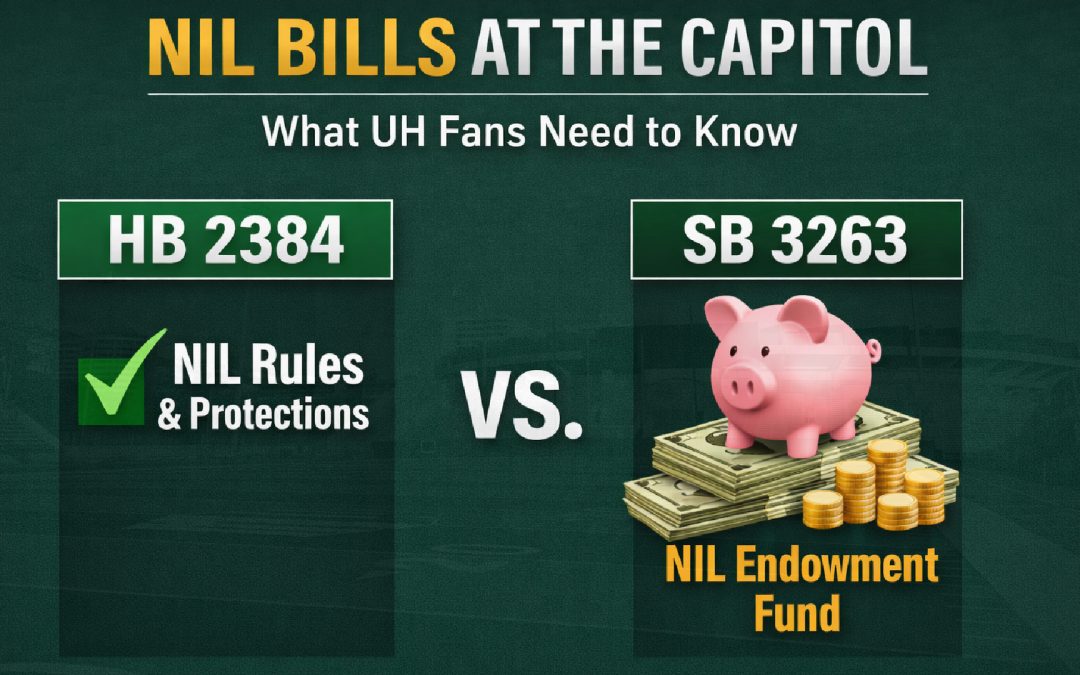
Two major bills at the Hawaiʻi State Capitol could significantly impact how University of Hawaiʻi student-athletes are compensated for their name, image, and likeness (NIL). While both bills deal with NIL, they take very different approaches — and understanding the difference matters for the future of UH athletics.

Here’s a simple breakdown of what each bill does, followed by a look at the pros and cons.

HB2384: Setting the Rules for NIL at UH

What it is:
HB2384 creates a statewide NIL framework for the University of Hawaiʻi. Instead of focusing on how much money athletes are paid, this bill focuses on rules, protections, transparency, and oversight.

What HB2384 does:

  • Confirms that UH student-athletes can earn money from NIL activities

  • Ensures NIL compensation does not affect scholarships or eligibility

  • Requires UH to adopt clear NIL policies

  • Provides education for athletes on contracts, taxes, and finances

  • Protects athletes’ privacy by reporting NIL activity in aggregate, not by name

  • Requires UH to consider Title IX when administering NIL programs

  • Allows both third-party NIL deals and institutional agreements

  • Includes a sunset date of 2030, meaning lawmakers will review it before making it permanent

Why it matters:
HB2384 is about getting NIL right before going all-in financially. It gives UH flexibility as college sports continue to change, while putting guardrails in place to protect student-athletes.

SB3263: Creating an NIL Endowment Fund

What it is:
SB3263 creates a permanent NIL endowment fund to directly pay UH student-athletes through a university-run program.

How the money works:

  • Requires a minimum $10 million endowment

  • The State would contribute $5 million

  • UH must raise $5 million to match it

  • The $10 million principal cannot be spent

  • Only investment earnings (typically ~4–5% per year) can be used to pay athletes

What that means in real terms:

  • A $10M endowment would likely generate about $400,000–$500,000 per year

  • That amount would be spread across all participating athletes and sports

Other key points:

  • Athletes paid through the fund must use a registered agent

  • UH must publicly report which athletes are paid and how much

  • If UH ever leaves Division I athletics, the entire fund reverts to the state

  • The bill has no sunset date — it’s permanent

Why it matters:
SB3263 prioritizes long-term funding stability, but limits how much money athletes can receive each year and requires significant fundraising by UH.

Comparing the Two: Pros and Cons

HB2384 — Pros

  • Protects student-athletes and their privacy

  • Flexible and adaptable to future NIL changes

  • Allows third-party NIL opportunities

  • Strong Title IX emphasis

  • Temporary, with built-in legislative review

HB2384 — Cons

  • Does not create a guaranteed funding source

  • Leaves NIL compensation levels largely up to the market


SB3263 — Pros

  • Creates a permanent NIL funding structure

  • Provides predictable, long-term funding

  • Strong public transparency and accountability

SB3263 — Cons

  • UH must raise millions in matching funds

  • Most of the money is locked away and cannot be spent

  • Annual payouts may be small compared to modern NIL expectations

  • Public disclosure of individual athlete payments raises privacy concerns

  • Little flexibility if NIL rules change nationally

The Big Picture for UH Fans

At its core, this is a debate about approach.

  • HB2384 focuses on rules, protections, and flexibility first

  • SB3263 focuses on building a long-term funding engine, even if short-term payouts are limited

As NIL continues to evolve nationwide, these decisions could shape the future of UH athletics for years to come.

Upcoming Hearing on HB2384 — Get Involved

House Bill 2384, the measure that establishes a statewide framework for name, image, and likeness (NIL) activity at the University of Hawaiʻi, is scheduled for a public hearing before the House Higher Education Committee.

This is a key opportunity for UH fans, student-athletes, coaches, and community members to listen in, offer testimony, or simply stay informed about how NIL policy could evolve in Hawaiʻi.

Hearing Date: Wednesday, February 11, 2026
Time: 2:30 p.m. HT
Location:
Bachman Hall, University of Hawai’i at Mānoa OR via video conference HERE
Committee: House of Representatives Committee on Higher Education (HED)

How to Participate in the HB2384 Hearing

Tip: You don’t need to be an expert. Saying why NIL protections and transparency matter to you as a UH fan is enough.


Option 2: Watch or Attend the Hearing

Hawai‘i Looks to Build Momentum Against UTEP Following Bye Week

Hawai‘i Looks to Build Momentum Against UTEP Following Bye Week

Rainbow Warriors seek consecutive wins for the first time this season as former WAC rivals meet for the first time in 22 yearsComing off its most complete performance of the season and a much-needed bye week, Hawai‘i returns to action Saturday...

Matingou magic helps Hawai’i hold on late against Seattle

Matingou magic helps Hawai’i hold on late against Seattle

HONOLULU – What a way to end college basketball’s opening day. After seeing a 16-point lead evaporate and falling behind for the first time all game late, the University of Hawai’i men’s basketball team sent fans home happy on Monday night as Jaden...

ADVERTISEMENT