UH Athletics Launches Shoji Society to Strengthen Support for Student-Athletes

UH Athletics Launches Shoji Society to Strengthen Support for Student-Athletes

UH Athletics Launches Shoji Society to Strengthen Support for Student-Athletes

The University of Hawai‘i Athletics Department is putting one of the most recognizable names in its history behind a new initiative aimed at building greater financial support for its student-athletes.

UH Athletics, in partnership with the UH Foundation, officially launched the Shoji Society on Wednesday, a new leadership giving society named in honor of legendary Rainbow Wahine volleyball head coach Dave Shoji.

The initiative comes as the financial landscape of college athletics continues to change, with schools facing increasing costs associated with supporting, recruiting and retaining student-athletes.

According to UH Athletics Director Matt Elliott, Shoji’s name continued to surface as the department considered how to identify its new major giving society.

“Dave’s name and his legacy and what his family has accomplished and contributed to this place just kept coming back,” Elliott said. “It really was a symbol of not just excellence, but of integrity.”

Membership in the Shoji Society begins with a minimum pledge of $50,000 over up to five years, with four giving levels ranging from $50,000 to $1 million. Contributions can support scholarships, NIL opportunities, student-athlete development, facility improvements and other priorities within UH Athletics.

The society launches with 10 charter members whose leadership commitments or lifetime giving have reached at least $1 million. Collectively, the group has committed more than $38.3 million over the past 46 years to support UH student-athletes.

The Shoji Society also serves as the major-giving component of the newly launched ‘Bows Athletics Club, which was created to provide a broader avenue for fans and supporters to financially support UH Athletics at all giving levels. A $100 donation provides membership in the ‘Bows Athletics Club.

For Shoji, who led the Rainbow Wahine for 42 seasons and won four national championships, lending his name to the initiative is another way to encourage the community to support the program he helped build.

“The landscape of athletics has changed,” Shoji said. “Back then we were worried about raising scholarship money. Well, scholarship money is minimum now. We have to keep up.”

Shoji said that support is increasingly important to provide student-athletes with what they need to compete with programs across the country.

“If my name can just propel somebody to give 50, maybe 100 dollars, I am so honored by that,” Shoji said. “If you check the box score on Sunday morning, then I think you should give whatever you can give to UH because we need the support and we need to stay up with the rest of the country.”

Women’s basketball head coach Khalilah Mitchell offered another perspective on what increased investment can mean beyond wins and losses, pointing to areas such as recruiting, nutrition, sports psychology and facilities.

“It doesn’t just help us win games. It builds the experience a championship program requires, and it lets us keep promises to the families who trust us with their daughters,” Mitchell said.

Mitchell added that the investment goes beyond what happens on the scoreboard, helping programs develop student-athletes throughout their time at UH.

“You’re helping us raise leaders. You’re helping us raise young women who show up, who speak up, who lift up, who graduate, who go into their communities and carry it in a very specific way,” Mitchell said. “Basketball is the vehicle. It was never the destination.”

Elliott said donor support can be directed toward a wide range of areas, including academics, physical and mental health, nutrition, performance technology, NIL and individual teams or the athletic department as a whole.

Men’s volleyball head coach Charlie Wade, who spent 11 seasons working alongside Shoji, said the increased investment is critical as the cost of competing in college athletics continues to rise.

“We’re not trying to be Ohio State or Texas,” Wade said. “We’re trying to be the best version of the University of Hawaii.” Wade said the increased level of support from the community can help put UH on a pathway to remain competitive nationally.

For Shoji, that ability to compete remains especially relevant to the Rainbow Wahine program he led for more than four decades.

Asked what it will take for Hawai‘i to return to the national championship conversation, Shoji pointed directly to recruiting and the resources available to attract players.

“We have to be able to provide what other schools are providing and maybe more,” Shoji said. “That’s what this is all about.”

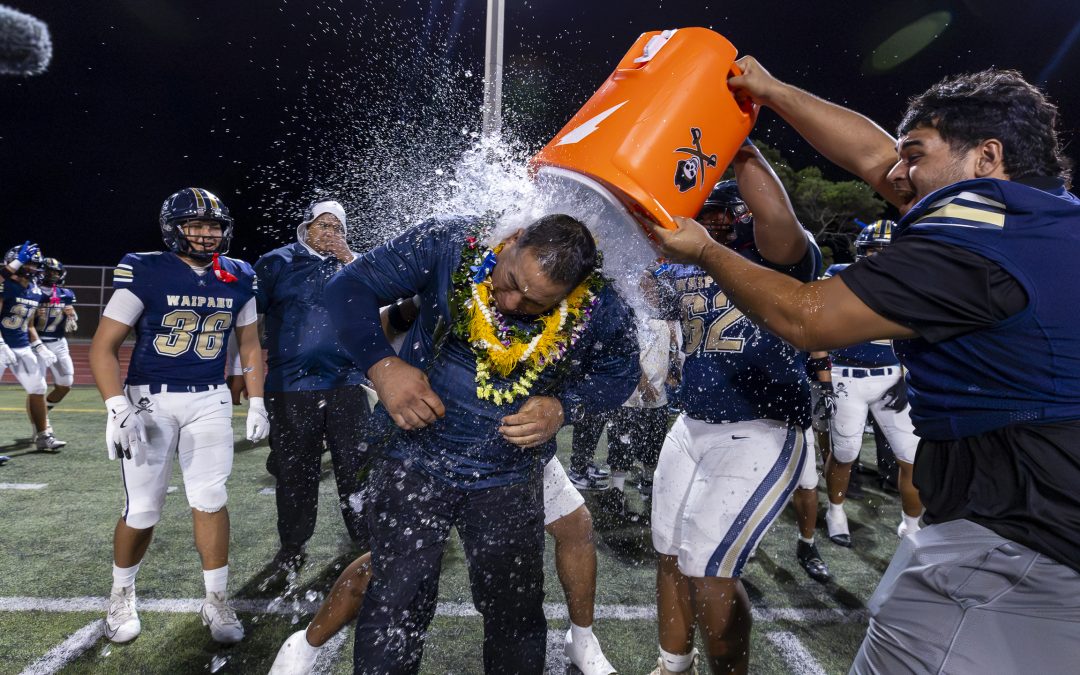
Waipahu smashes Aiea to roll to OIA Division I title

Waipahu smashes Aiea to roll to OIA Division I title

PEARL CITY – For the 15th time in program history, the Waipahu Marauders stand atop the OIA football ranks. Behind a four-touchdown showing from star sophomore quarterback Jake Garcia, the Waipahu varsity football team cruised to a dominant 42-7...
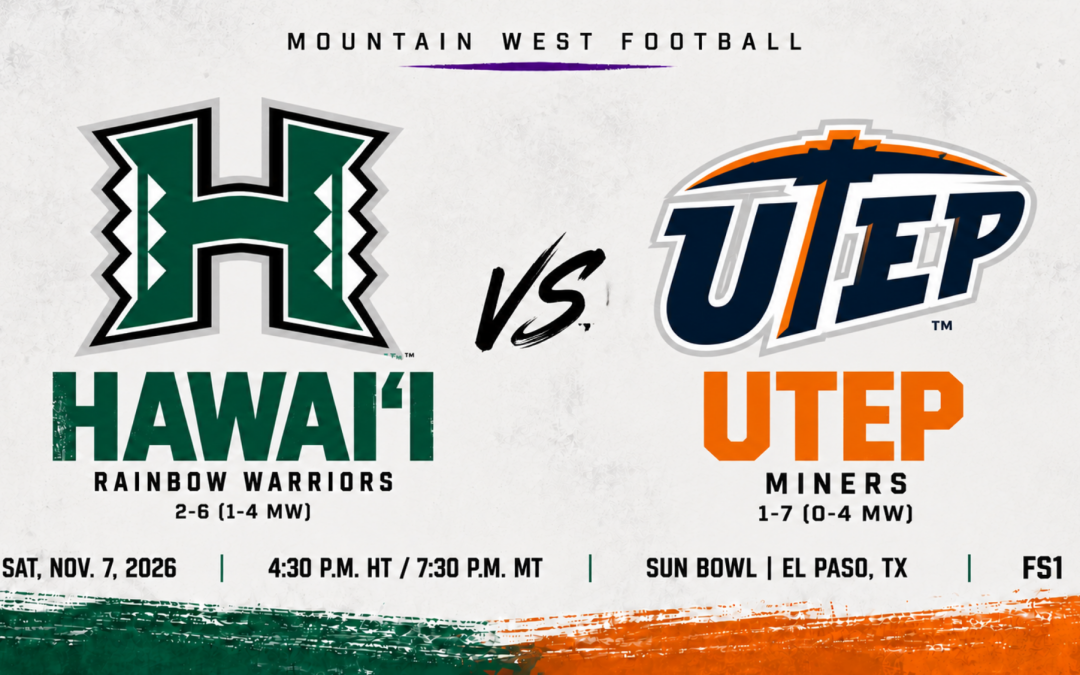
Hawai‘i Looks to Build Momentum Against UTEP Following Bye Week

Hawai‘i Looks to Build Momentum Against UTEP Following Bye Week

Rainbow Warriors seek consecutive wins for the first time this season as former WAC rivals meet for the first time in 22 yearsComing off its most complete performance of the season and a much-needed bye week, Hawai‘i returns to action Saturday...

ADVERTISEMENT

From Virginia Beach to Mānoa: Joshua Walker’s Full-Circle Journey to Rainbow Wahine Head Coach

From Virginia Beach to Mānoa: Joshua Walker’s Full-Circle Journey to Rainbow Wahine Head Coach

From Virginia Beach to Mānoa: Joshua Walker’s Full-Circle Journey to Rainbow Wahine Head Coach

“It makes absolutely no sense to any human standards that my name is next to Alan Kang, Dave Shoji and Robyn Ah Mow.”

Joshua Walker laughed as he reflected on becoming the next head coach of the University of Hawai‘i Rainbow Wahine volleyball program.

The Rainbow Wahine program traces its roots to 1972 and has become one of the most successful and recognizable brands in collegiate volleyball. Over more than five decades, only three people have held the position Walker now assumes.

As he prepares to become the fourth, Walker is still processing the significance of the opportunity.

“It’s clear that God has had His hands uniquely placed on my life the whole time, whether I’ve realized it or not, to get me to this point,” Walker said during his introductory media availability.

While the position may feel surreal to Walker, the path that brought him here has been years in the making.

Long before he became an All-American, national championship-winning assistant coach, or one of the most respected rising coaches in the sport, Walker was a kid growing up in Virginia Beach who dreamed of playing in the NBA.

Volleyball wasn’t originally part of the plan.

His older sister changed that.

“My sister played in high school before me,” Walker recalled. “I wanted to be a basketball player.”

His sister convinced him that volleyball would better complement basketball than football, and Walker decided to give it a try. The decision ultimately changed the course of his life.

By the time he graduated from Tallwood High School, Walker had developed into one of Virginia’s top volleyball prospects. While several schools recruited him, Hawai‘i entered the picture late in the process.

The decision to leave the East Coast for Mānoa wasn’t necessarily the obvious one, but it was the one that felt right.

Walker arrived at UH in 2006 and steadily developed into one of the top players in the program. By his junior season, he had become an AVCA All-American and eventually finished his career with 1,428 kills, which still ranks among the best totals in school history.

Photo credit: Hawaii Athletics

One of the most influential relationships during that time was with Charlie Wade.

Wade was hired in 2009 and took over the Rainbow Warrior volleyball program for the 2010 season, Walker’s junior year. The change proved significant for both the program and Walker’s development.

“I didn’t need a lot of motivation,” Walker said. “I just needed a clear path.”

Walker credits Wade for helping provide that direction, and the two maintained a close relationship long after Walker’s playing career ended.

His years at UH also shaped his life away from volleyball.

Walker met Tehane Higa, a standout defender on the Rainbow Wahine soccer team. The two would eventually marry and build a family together. Today, they are raising five children.

Volleyball helped bring Walker to Hawai‘i, but the relationships he built during his time at UH ensured Hawai‘i would always remain part of his life.

Joshua Walker with wife Tehane (Higa) and their children in 2022 | Credit: Joshua’s Walker’s Instagram @jwalkuh27


After graduating, Walker spent several years playing professionally overseas and with Team USA. But when an opportunity arose to return to UH in 2016 as an assistant coach under Wade, he didn’t hesitate.

His first season on the coaching staff confirmed he had found a new passion.

“After that first season, I was really hooked,” Walker said.

Over the next seven seasons, Walker helped the Rainbow Warriors become one of the premier programs in men’s collegiate volleyball. Hawai‘i compiled a 149-36 record during his tenure and captured back-to-back NCAA National Championships in 2021 and 2022.

Along the way, Walker earned AVCA Assistant Coach of the Year honors and developed a reputation as one of the brightest young coaches in the game.

Yet despite the success, he felt there was more to learn.

When Baylor offered him an opportunity to join its women’s volleyball staff in 2022, Walker saw it as a chance to broaden his experience rather than simply advance his career.

“I didn’t necessarily go there to just add a line on the résumé,” Walker said. “I really went there to become a better coach and to have a chance to coach women.”

During his four seasons at Baylor, Walker helped the Bears remain among the nation’s top programs while gaining valuable experience in recruiting, roster management and the evolving landscape of women’s collegiate volleyball. He also continued to expand his coaching résumé through USA Volleyball, helping national teams win gold medals at international competitions.

The move reinforced something many within the sport already believed: Walker was preparing to become a head coach.

This year, that opportunity arrived.

Athletics Director Matt Elliott said the search focused on finding someone who understood Hawai‘i’s history, could navigate the modern recruiting environment, and possessed a clear vision for the future.

Walker checked every box.

His familiarity with UH, experience coaching championship-level volleyball, and understanding of the current collegiate landscape made him an ideal fit for a program entering a new chapter.

“It’s less about me feeling like I wanted the UH job and more about me being called to do this job,” Walker said.

Even before officially arriving back in Honolulu, Walker was already focused on the future. He conducted his introductory media availability via Zoom from Phoenix, where he was recruiting while preparing for the upcoming season.

There is still a roster to evaluate, a staff to finalize and a season to prepare for.

But after four years away, there are also a few things outside of volleyball that Walker is looking forward to.

Asked what he missed most about Hawai‘i, he immediately thought of the food.

“Sushi, sashimi on a more consistent basis, for sure,” he said with a laugh. “You can get sushi on the mainland, obviously, but these things are so small and the fish is barely in there—or you can tell it was frozen.”

Then came the rest of the list.

“I’m looking forward to getting some good broke-da-mouth sushi and getting my kalbi.”

Walker joked that returning home could come with one unintended consequence.

“I’m probably going to gain some weight now,” he laughed.

For a coach who has spent the last two decades building a life connected to the University of Hawai‘i, it’s a small price to pay for the opportunity that now awaits him.

The journey from Virginia Beach to Mānoa has taken him around the world.

Now, it has brought him back to lead one of college volleyball’s most storied programs.

Joshua Walker Returns Home as Hawai‘i Names New Rainbow Wahine Volleyball Head Coach

Joshua Walker Returns Home as Hawai‘i Names New Rainbow Wahine Volleyball Head Coach

Joshua Walker Returns Home as Hawai‘i Names New Rainbow Wahine Volleyball Head Coach

HONOLULU — The University of Hawai‘i has turned to one of its own to lead one of the most storied programs in college volleyball.

Athletics Director Matt Elliott announced Friday that former Rainbow Warrior All-American and national championship-winning assistant coach Joshua Walker has been selected as the fourth head coach in Rainbow Wahine volleyball history.

Walker returns to Mānoa after spending the last four seasons at Baylor, where he helped guide the Bears to multiple NCAA Tournament appearances and establish one of the nation’s top recruiting classes. The move brings back a coach deeply connected to Hawai‘i volleyball, both as a player and coach, at a pivotal moment for the program.

“We are absolutely thrilled to welcome Joshua Walker back to the University of Hawai‘i,” Elliott said. “Joshua embodies the very best of Hawai‘i volleyball tradition and knows firsthand what it takes to win at the highest level here.”

The hire concludes after a nationwide search that Elliott described as unique due to the timing of the opening. With many programs and coaches already deep into recruiting and summer preparation, the process relied much more heavily on direct conversations rather than with a traditional pool of applicants.

“We had to be persistent, patient and stay committed to what was right for UH,” Elliott said during Friday’s media availability. “Ultimately, we ended in a fantastic place.”

Walker becomes just the fourth head coach in the 50-year history of the Rainbow Wahine program, taking over the helm of one of the most tradition-rich legacy program in collegiate athletics.

According to Elliott, the search committee prioritized finding someone who understood the history of Hawai‘i volleyball, could navigate today’s rapidly evolving recruiting and NIL landscape and possessed a championship-level vision for the future.

“Joshua has won national championships, he’s been an All-American, he’s seen it at the highest level,” Elliott said. “He’s got a plan, and that is really the most important thing.”

A Familiar Face Returns

For Hawai‘i fans, Walker’s return goes far beyond his impressive résumé.

A Rainbow Warrior standout from 2006-11, Walker is one of the men’s program’s all-time greats. His 1,428 career kills rank fifth in school history, even earning AVCA All-America honors as a junior to go along with multiple All-MPSF selections.

After playing professionally in Europe and with Team USA, Walker returned to UH as an assistant coach under Charlie Wade in 2016. During his seven seasons on staff, Hawai‘i posted a 149-36 record and captured back-to-back NCAA National Championships in 2021 and 2022. He was named AVCA Assistant Coach of the Year in 2019.

Walker later joined Baylor’s women’s volleyball program, eventually rising to the associate head coach chair while helping the Bears maintain national contender status.

His experience also extends internationally. Most recently, Walker helped guide USA Volleyball’s U17 National Team to a gold medal at the 2026 Pan-American Cup with a 4-0 record.

“I feel extremely blessed and thankful for this opportunity,” Walker said in a press release from the school. “Hawai‘i has been home for a while, but I love that it gets to be our workplace again. I’m excited to get going and will work to make this program truly one of a kind.”

Strong Support Across Volleyball

Walker’s hiring elicited an overwhelmingly positive reaction from coaches, players and fans throughout the volleyball community.

Wade, who coached Walker as a player before welcoming him on staff as an assistant coach, called the move a dream realized.

“Josh was a special player and a special coach for our program,” Wade said. “I know this was one of his dreams when he left our team. He was a huge part of our success while he was on staff with us.”

Legendary former Rainbow Wahine coach Dave Shoji praised the selection as well.

“Josh is an excellent choice to lead the Rainbow Wahine,” the retired Shoji said. “He’s familiar with the landscape, he is a tremendous mentor to his athletes, and he knows the game inside and out.”

Baylor head coach Ryan McGuyre described Walker as “the perfect hire for Hawaii,” while citing his integrity, leadership, and ability to build relationships while developing championship-caliber programs.

Texas head coach Jerritt Elliott echoed the sentiments, calling Walker “the perfect person to lead the program into its next chapter” largely because of his understanding of Hawai‘i’s culture, tradition, and expectations.

Looking Ahead

Walker officially began his tenure already, with Elliott noting that the new coach was eager to get started.

“As of tomorrow, it’s his team,” Elliott said. “I want the start date to be tomorrow because I’m ready to go, I’m ready to recruit.”

The timing is critical as Hawai‘i prepares for the upcoming transition into the Mountain West Conference and continues navigating an increasingly competitive collegiate recruiting environment.

Elliott said Walker’s recent experience coaching at the highest levels of women’s volleyball made him particularly attractive for the position.

“He fully understands the NIL landscape and knows the nuances of what it means to be recruiting,” Elliott said. “Whether it’s domestic or international, retaining a roster—he understands how to do that.”

Walker returns to Hawai‘i alongside his wife Tehane, a former Rainbow Wahine soccer standout, and their five children.

For a program built on tradition, championships, and community, the Rainbow Wahine are placing their future in the hands of someone who understands all three.

And for Walker, it is a return to the place he has long called home.

USA Volleyball Hall of Famer Robyn Ah Mow steps down after nine years with Hawai’i

USA Volleyball Hall of Famer Robyn Ah Mow steps down after nine years with Hawai’i

USA Volleyball Hall of Famer Robyn Ah Mow steps down after nine years with Hawai’i

HONOLULU – It’s always hard being the coach after the coach, but it’s even harder to ask for anything more than what Robyn Ah Mow gave the University of Hawai’i Rainbow Wahine volleyball program.

After nine years and eight seasons at the helm of one of the most notable women’s volleyball programs in the country, Ah Mow announced that she would be stepping down from the head coaching role at her alma mater on Wednesday.

“This decision was not easy,” Ah Mow said in a press release sent out by UH. “It came after a great deal of reflection and soul searching, but the time has come to focus on my family who have sacrificed so much time with me so I could fulfill my dream of being the head coach of this storied program.”

The Rainbow Wahine went 165-72 under the watch of Ah Mow, dominating Big West play to the tune of a 114-28 record since 2017. Hawai’i made the NCAA Tournament in seven of her eight campaigns leading the program, missing out on the national tournament last season after going 12-17 and 8-10 in conference play.

Ah Mow took over as the program’s third-ever head coach after legendary coach Dave Shoji’s retirement following the 2016 season. In 42 years under his watch, Hawai’i won four national titles and racked up four other national runner-up finishes while finishing with 20-plus victories in 38 of the 42 campaigns.

Shoji finished his career with a record of 1,202-204-1, the second-most wins of any coach in the history of collegiate women’s volleyball at the time of his retirement. Ah Mow was a two-time AVCA 1st-team All-American setter for Shoji, going 66-4 and finishing as the national runners-up once in their four years together.

Ah Mow went on to compete in three different Olympic Games for the U.S. Women’s National team, serving as a team captain in 2008 and helping guide the Stars and Stripes to a silver medal. At the time, it was the third-ever medal that the USA women’s volleyball team had earned and matched the 1984 group for the best finish in the nation’s history.

She was inducted into the University of Hawaii Sports Circle of Honor in 2005 and joined fellow Rainbow Wahine great Heather Bown as part of USA Volleyball’s Hall of Fame Class of 2024.

“Robyn Ah Mow is the epitome of what it means to be a Rainbow Wahine,” Hawaii’s director of athletics Matt Elliott said in a statement released by the school. “She is a fierce competitor, a dedicated mentor, and an undeniable legend in the state of Hawai’i and the global volleyball community. We are incredibly grateful for the dedication and passion she poured into this program over the last nine years as the lead of Wahine Volleyball, and more than 30 years since she first stepped on campus. We will all miss her dearly as our head coach and wish her the absolute best in her next chapter.”

After her playing career concluded, Ah Mow joined the Rainbow Wahine coaching staff under Shoji and spent four seasons as an assistant from 2011 to 2015. She was officially tabbed as Shoji’s successor in 2017, becoming the first female head coach in the program’s illustrious history.

Her coaching career saw more success in the islands as she was named Big West Coach of the Year on three separate occasions (’19, ’21, ’22) while helping pilot the Rainbow Wahine to tournament appearances in all but one season.

“I gave everything I had to this team, pouring into each and every player with the goal of helping them become not only the best volleyball players they could be, but strong, successful women in life,” Ah Mow’s statement continued. “Playing for the ‘H’ was a privilege. Coaching this program has been an incredible honor.”

Photo Credit: HSRN

The consistent changes in collegiate athletics have accelerated the expiration date on a plethora of big-name coaches over the past half-decade with transfer portal madness, Name, Image and Likeness bidding wars and conference realignment as a few of the biggest reasons for early retirements and surprise new life ventures for coaches becoming more common.

Laura Beeman, who spent the previous 14 seasons leading the UH women’s basketball team to bundles of success in the Big West, stunned the local sports world as she announced her retirement from coaching at the end of March.

Bob Coolen, the winningest coach in UH softball history, called it a career last spring after 34 years as the head coach of the Rainbow Wahine.

Now, Ah Mow becomes the latest of the bunch to say “aloha” to the college coaching ranks as she focuses on spending time with her family.

“To the people of Hawai’i, thank you for your unwavering support and aloha throughout my time as both a player and a coach,” Ah Mow’s statement from UH closed with. “Mahalo and Aloha.”

Associate head coach Kaleo Baxter will serve as the interim head coach for UH, though a national search for a permanent head coach is set to begin immediately.

Waipahu smashes Aiea to roll to OIA Division I title

Waipahu smashes Aiea to roll to OIA Division I title

PEARL CITY – For the 15th time in program history, the Waipahu Marauders stand atop the OIA football ranks. Behind a four-touchdown showing from star sophomore quarterback Jake Garcia, the Waipahu varsity football team cruised to a dominant 42-7...

ADVERTISEMENT