UH Athletics Generates $753 Million in Economic Impact, $1.73 Billion in Media Exposure Value

UH Athletics Generates $753 Million in Economic Impact, $1.73 Billion in Media Exposure Value

UH Athletics Generates $753 Million in Economic Impact, $1.73 Billion in Media Exposure Value

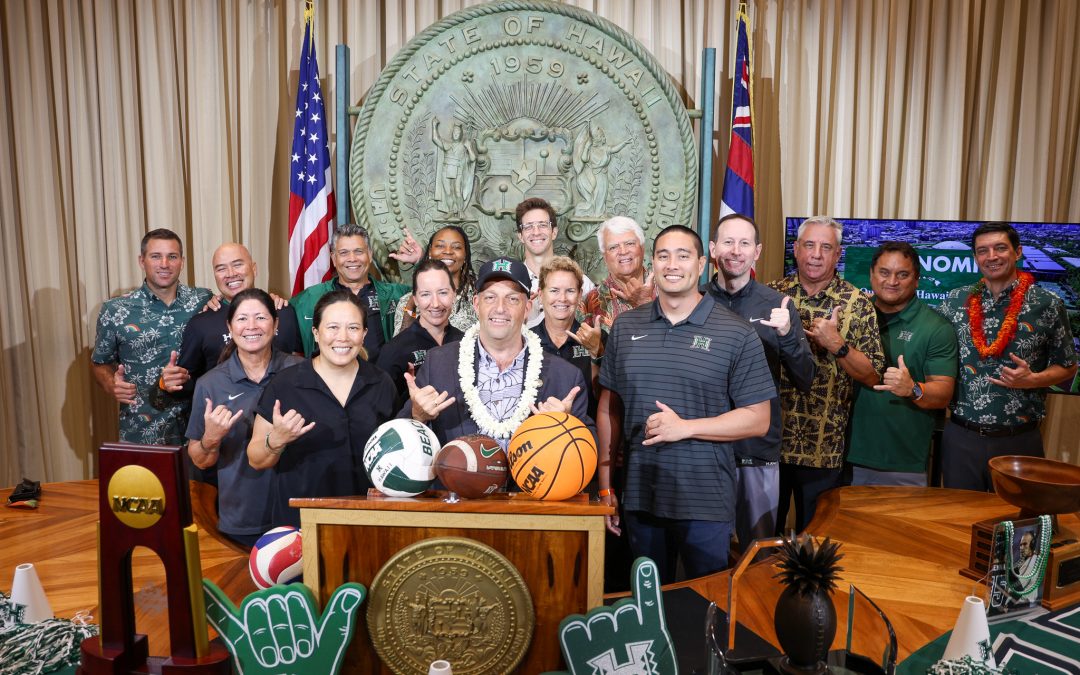
Photo courtesy of the Office of Governor Josh Green

New study highlights the university’s economic contributions as state and business leaders call for continued investment in Hawai‘i Athletics.

HONOLULU — The University of Hawai‘i at Mānoa athletics program generated nearly $753 million in economic activity over four years, according to a newly released study highlighting the department’s contributions to local businesses, employment, tourism and statewide exposure.

Conducted by Collegiate Consulting, the study estimates $752.88 million in total economic impact from fiscal years 2023 through 2026, averaging approximately $188.22 million annually. The report also estimates that UH Athletics generated $1.73 billion in media exposure and advertising value over approximately three and a half years.

The findings were presented Thursday during a press conference featuring Governor Josh Green, UH Athletics Director Matt Elliott, Honolulu Mayor Rick Blangiardi and leaders from Hawai‘i’s business and tourism industries.

“I see UH Athletics as a critical investment in Hawaii’s people,” Green said. “It’s our economy and our future that we’re talking about.”

AT A GLANCE: UH ATHLETICS ECONOMIC IMPACT

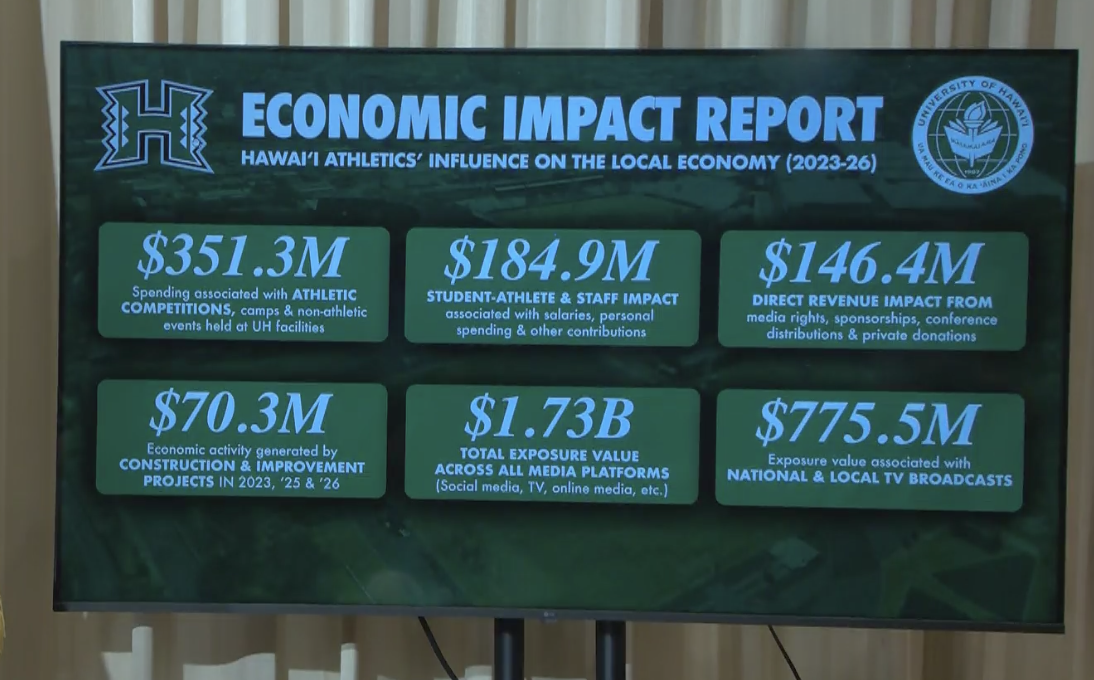
  • $752.9 million in estimated total economic impact over four years (FY2023–FY2026), averaging $188.2 million annually.
  • $351.3 million generated through game-day activity, athletic events, camps and other events held at UH facilities.
  • 1,242 jobs supported by athletics-related economic activity in fiscal year 2025, including jobs in hospitality, transportation and other industries.
  • $1.73 billion in media exposure value through television, streaming, radio, online news and social media. This is estimated advertising value, not actual revenue.
  • $184.9 million in economic activity associated with athletics staff and student-athletes, plus $70.3 million from facility construction.
  • The bigger picture: State and university leaders say the findings strengthen the case for continued investment in UH Athletics, although the study does not establish a direct financial return to taxpayers.

LISTEN TO THE FULL PRESS CONFERENCE
Breaking Down the Economic Impact

The study examined spending and economic activity associated with UH athletic competitions, visiting teams, employees, student-athletes, facilities and other events.

Its four major categories included:

  • $351.27 million from game-day spending, athletic events, camps and other activities hosted at UH facilities.

  • $184.94 million in economic activity associated with athletics employees and student-athletes.

  • $146.35 million in athletics-generated revenue.

  • $70.32 million from athletic facility construction.

The report also estimates that UH Athletics-related activity supported 1,242 jobs in fiscal year 2025, including employment associated with hospitality, transportation, construction and other industries benefiting from athletic events.

For example, visiting teams and their supporters contribute to Hawai‘i’s economy through hotel stays, dining, transportation and retail spending, while local fans support businesses surrounding athletic venues.

“When the Rainbow Warriors and Rainbow Wahine take the field, it’s more than just a game,” said Outrigger Hospitality Group President and CEO Jeff Wagner. “That activity creates real economic opportunity for our community.”

Wagner emphasized that a single weekend tournament can generate meaningful business for hotels, restaurants and other service providers.
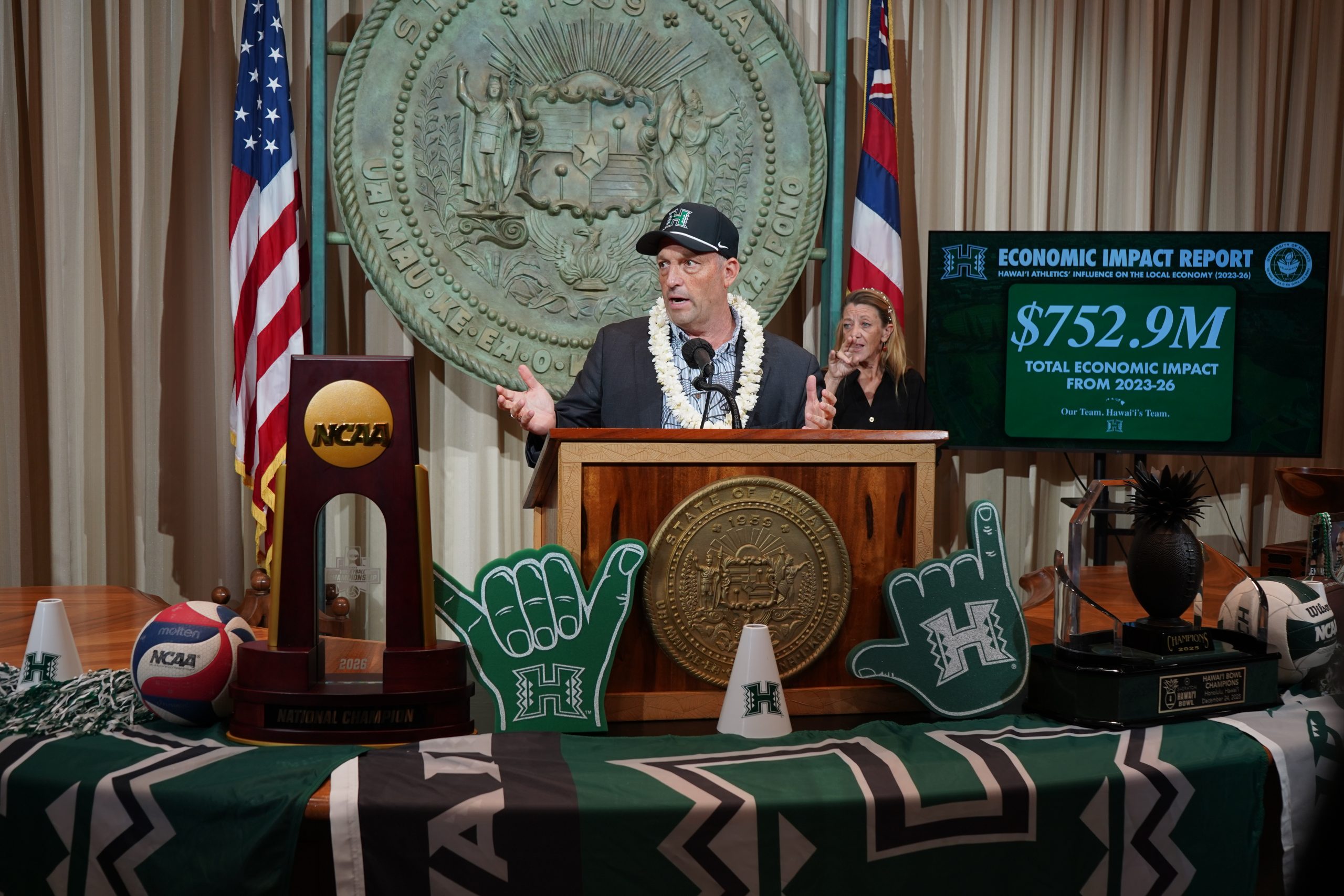
Hawai‘i Gov. Josh Green discusses the University of Hawai‘i Athletics Economic Impact Report during a press conference on October 29, 2026. The study estimates that UH Athletics generated nearly $753 million in economic activity over four years, from 2023 through 2026. (Photo courtesy of the Office of Governor Josh Green)

Understanding the $1.73 Billion Media Value

Beyond direct economic activity, the study estimates that UH Athletics generated $1.73 billion in advertising value equivalency through national and local television broadcasts, streaming, radio, online news coverage and social media.

Unlike the economic impact figure, this amount does not represent actual revenue or money spent in Hawai‘i. Instead, it estimates the promotional value of the exposure UH receives through athletics-related media coverage.

Nationally televised football games, postseason appearances and championship competitions provide opportunities to showcase the university and Hawai‘i to audiences across the country.

The report’s economic impact calculations also account for the multiplier effect, which estimates how spending circulates through the economy. For example, money spent at a restaurant can support employee wages, purchases from suppliers and additional local spending.

The analysis includes three years of complete data and partial data for fiscal year 2025–26, with estimates used where necessary.

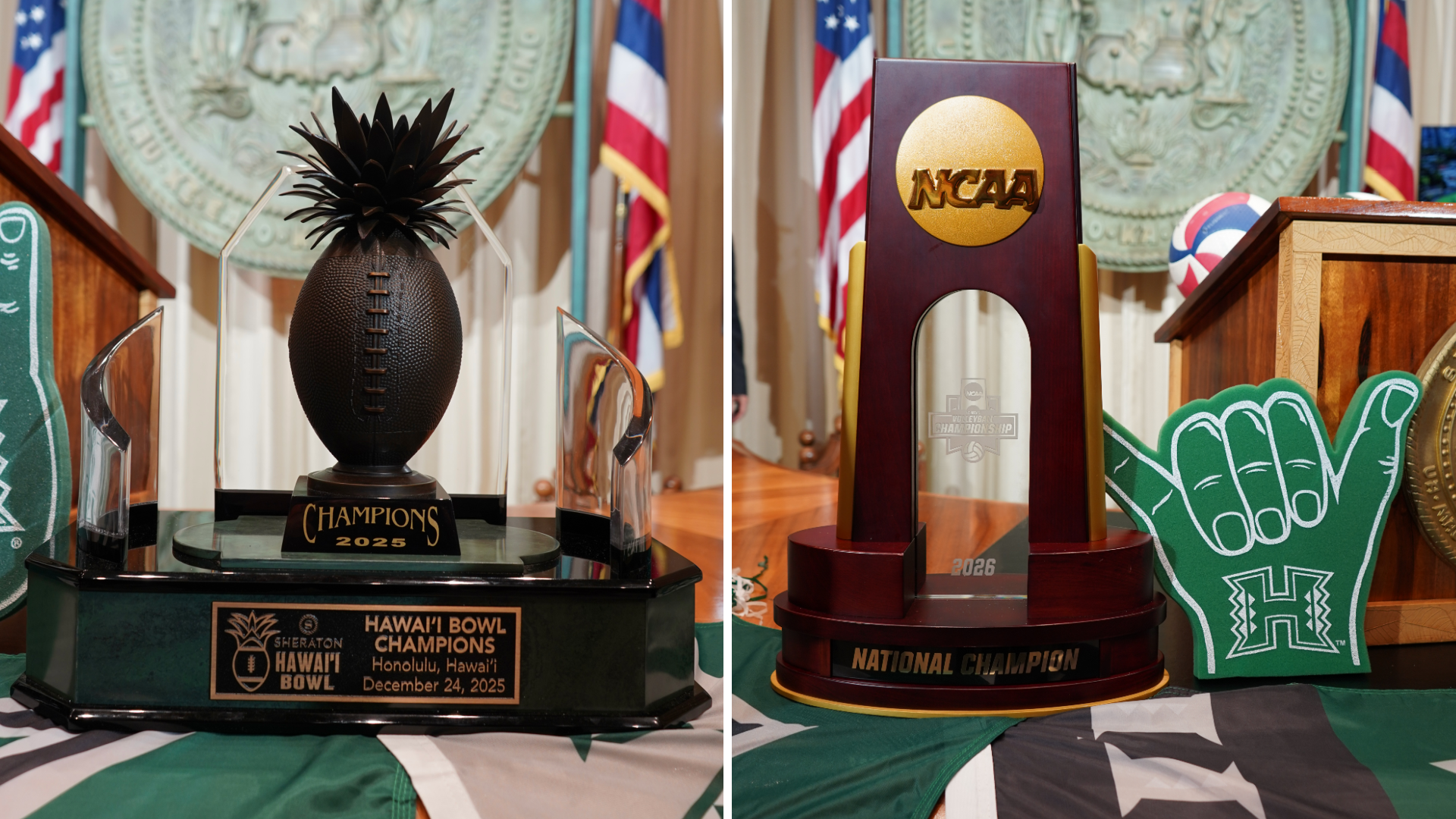
The University of Hawai‘i football team faced California in the 2025 Hawai‘i Bowl, which averaged 2.7 million viewers nationwide on ESPN, making it the most-watched Hawai‘i Bowl since 2013. The national broadcast contributed to the university’s overall media exposure and promotional value.
(Photo Credit: Michael Lasquero, HSRN)

Making the Case for Continued Investment

The findings arrive as college athletics undergoes significant financial changes, including conference realignment, new revenue opportunities and increased investment in student-athlete compensation.

Elliott said UH Athletics currently spends approximately $65 million annually, with additional capital improvement expenditures of roughly $10 million.

He described the department’s estimated annual economic contribution of more than $188 million as an important figure for understanding its broader value to the state.

“These dollars are coming in so many different ways,” Elliott said, pointing to ticket sales, multimedia rights, visitor spending, employee and student-athlete expenditures, and infrastructure improvements.
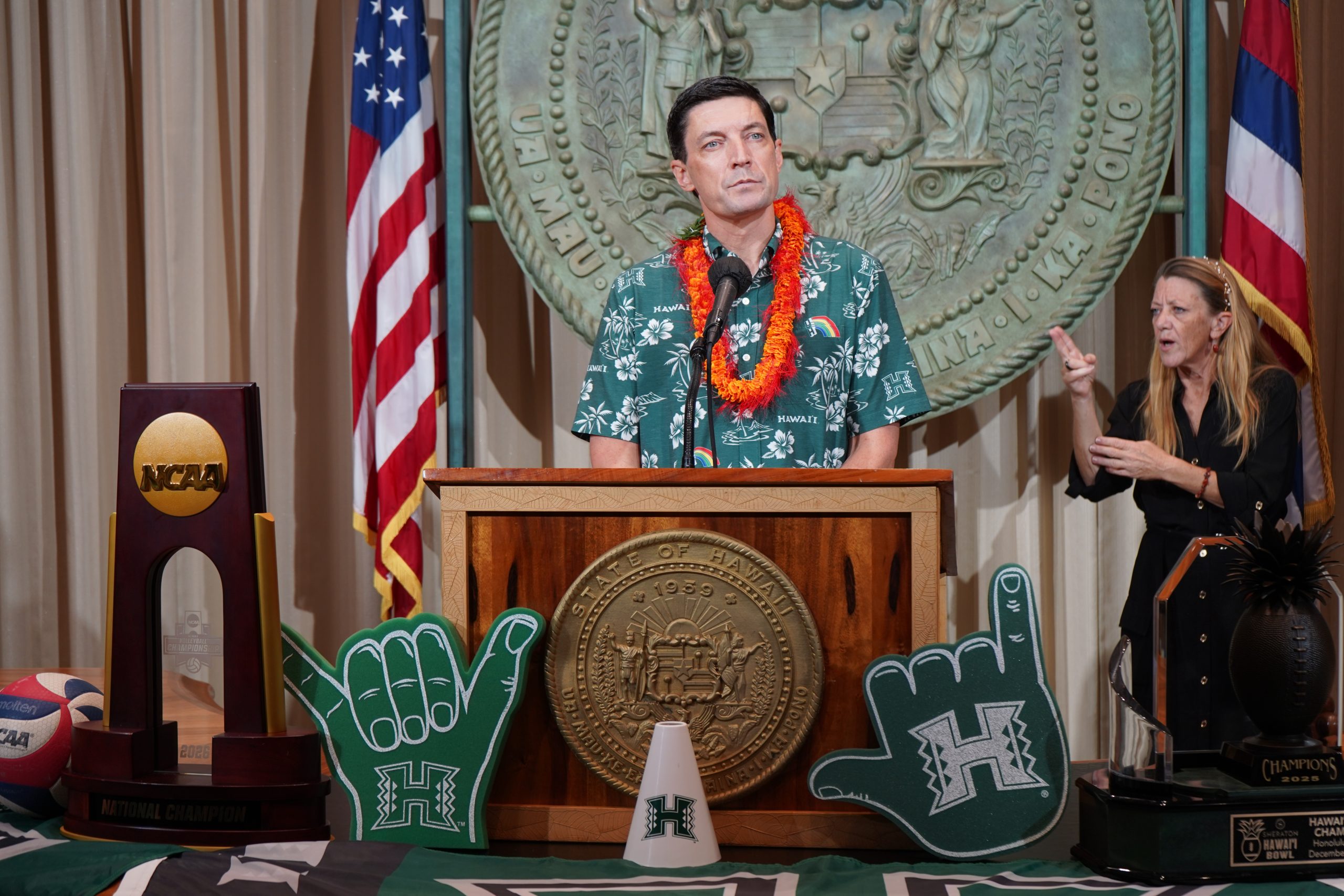
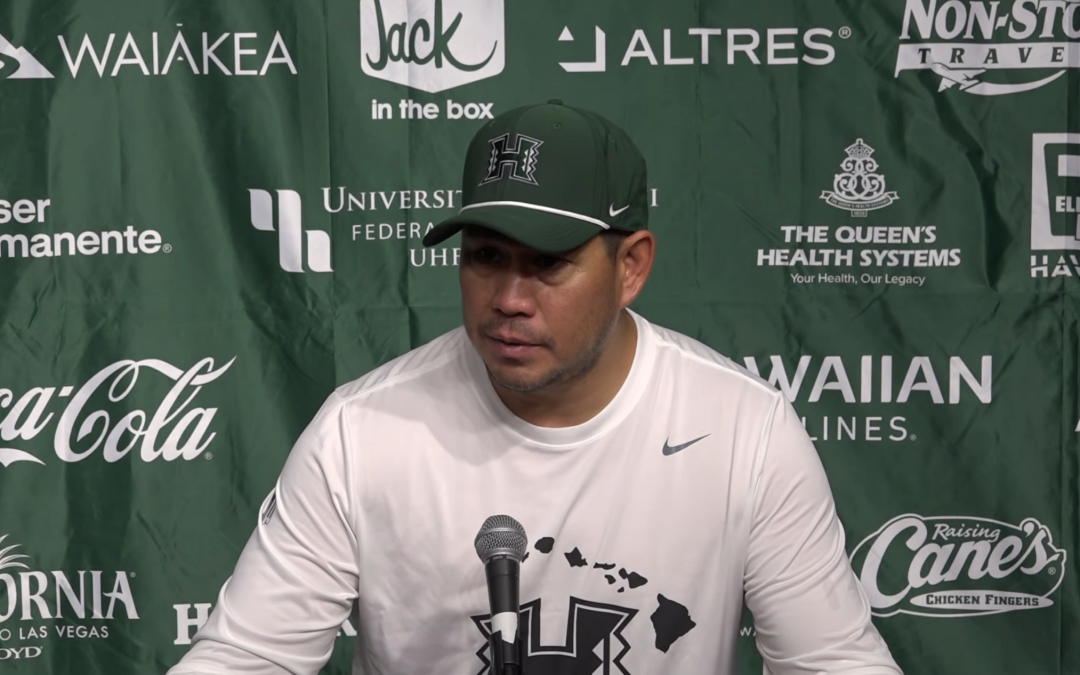
University of Hawai‘i Athletics Director Matt Elliott discusses the department’s economic contributions during an October 29, 2026, press conference. Elliott highlighted findings from a new study estimating that UH Athletics generates approximately $188 million in annual economic activity across the state. (Photo courtesy of the Office of Governor Josh Green)

Green also expressed support for exploring additional investment in UH Athletics, including potential legislative assistance for name, image and likeness (NIL) opportunities.

“We can’t fall far behind. If we do, we’ll never catch up,” Green said.

Elliott identified conference realignment, new revenue streams and NIL investment as three major areas UH must address to remain competitive, particularly following its transition to full Mountain West Conference membership.

However, the study does not establish whether the program generates more state tax revenue than it receives in public funding. It also does not separately quantify how much economic activity represents entirely new spending that would not otherwise have occurred in Hawai‘i.

Those distinctions are important: economic impact is not the same as profit or a direct financial return to taxpayers.

Still, university and state leaders believe the findings provide a stronger foundation for future discussions about athletics funding and the department’s role in Hawai‘i.

Blangiardi, a former UH football player, coach and broadcaster, emphasized the program’s significance beyond the financial numbers.

“When the teams win, it’s not just the team winning, it’s Hawaii winning,” Blangiardi said.

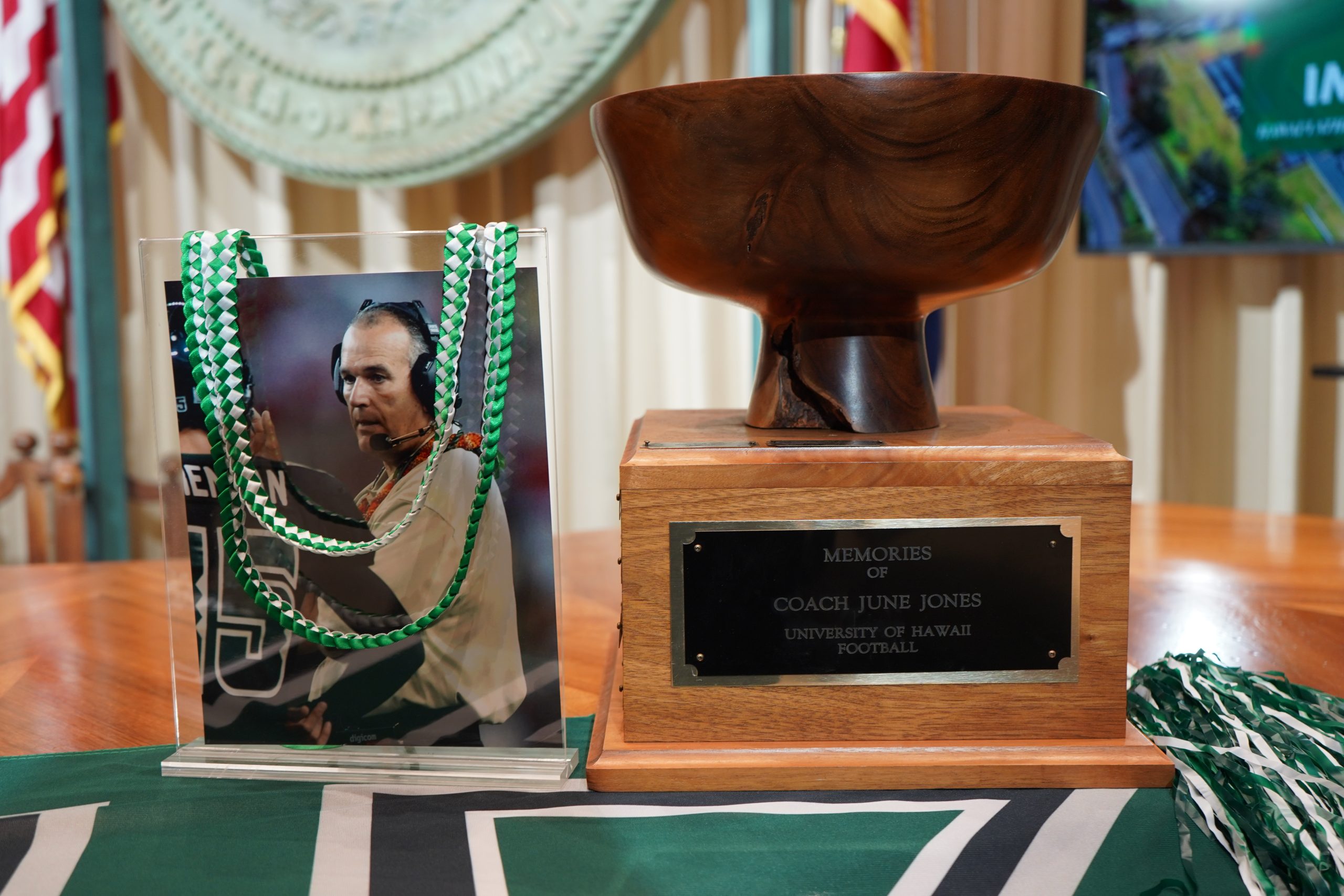
The press conference also opened with a moment of silence honoring legendary former UH football coach June Jones, who died earlier Thursday.

For Elliott, the report represents another opportunity to demonstrate the value of a program that serves approximately 500 student-athletes across 21 NCAA Division I teams — and whose influence extends well beyond the playing field.

Photos courtesy of the Office of Governor Josh Green
HAWAI’I FOOTBALL COVERAGE ON HSRN IS BROUGHT TO YOU BY

Kilminster’s 29 helps Hawaii Pacific push past Alaska Fairbanks

Kilminster’s 29 helps Hawaii Pacific push past Alaska Fairbanks

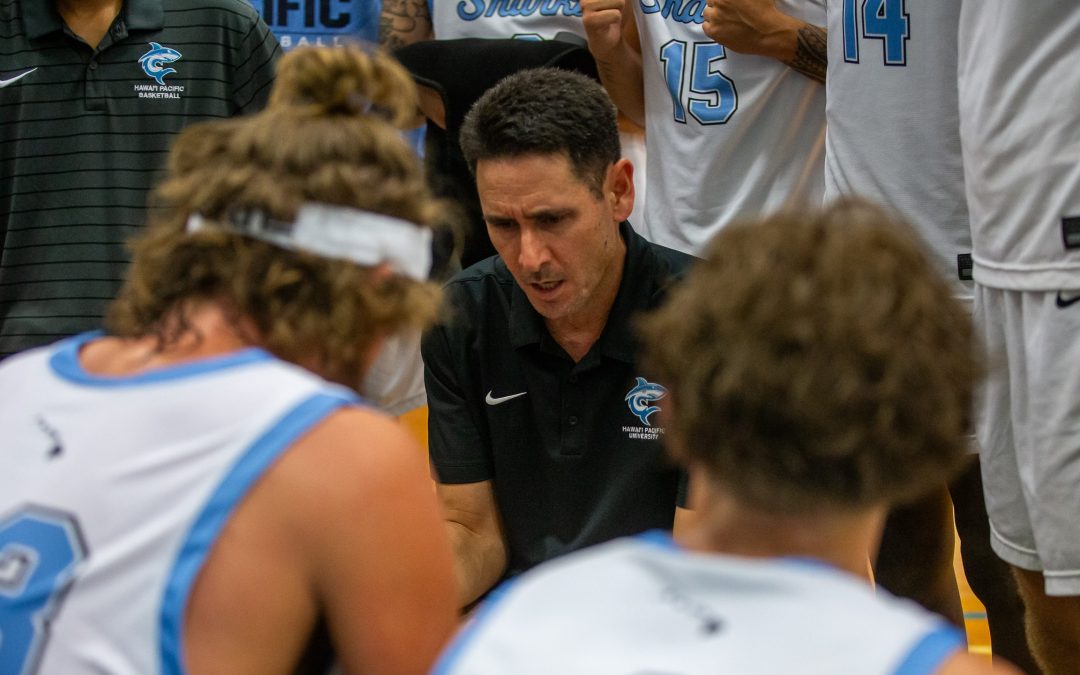
HONOLULU – Welcome back, Killa Kilminster. The Hawaii Pacific University men’s basketball team moved back above .500 on Friday night, using a 29-point explosion from fifth-year guard Evan Kilminster to cruise by Alaska Fairbanks on the first night...
ADVERTISEMENT
Hawaiʻi Tourism & Gaming Working Group Takes Closer Look at Lotteries, Online Gaming

Hawaiʻi Tourism & Gaming Working Group Takes Closer Look at Lotteries, Online Gaming

Hawaiʻi Tourism & Gaming Working Group Takes Closer Look at Lotteries, Online Gaming

During its latest meeting, the Hawai’i Tourism and Gaming Working Group focused its attention on examining not only how other states generate revenue through gaming, but how those systems are structured, regulated and used to fund public needs.

The meeting featured Andrew White, executive director of the North American Association of State and Provincial Lotteries (NASPL), and Helene Keeley, director of the Delaware Lottery Office. Brianne Doura-Schawohl, president and CEO of Doura-Schawohl Consulting LLC, later addressed sports betting, online gambling and concerns surrounding gambling-related harm.

For Hawaiʻi, one theme emerged throughout the lottery discussion: before asking how much money a lottery could generate, the state may first need to determine what it wants that money to accomplish.

Start With the Need

When asked whether a lottery discussion should begin with potential revenue or with what the state hopes to accomplish, White said that in his experience, the creation of a lottery is often driven by a specific public need.

One example is education.

Several states direct lottery proceeds toward college scholarships, allowing students to attend local institutions and, in some cases, helping states keep students at home for their education.

“The need has really driven starting the lottery or voting it in,” White said.

Lottery beneficiaries differ from state to state and can include education, local governments, senior programs, economic development, environmental initiatives, property-tax relief and veterans programs.

That flexibility could become an important part of Hawaiʻi’s discussion: If the state were to establish a lottery, what would Hawaiʻi want its beneficiary to be?

What Counts as a “Lottery”?

Another takeaway from the hearing was that the answer depends heavily on the state.

White described the differences as “jurisdictional variance.” Some states operate traditional lotteries centered around draw games and instant tickets, while others place much broader gaming operations under their lottery agencies.

Delaware is an example of the latter.

The Delaware Lottery began with traditional products in 1975 and gradually expanded to include video lottery terminals, table games, iGaming, iLottery and online sports betting. In Delaware, those various forms of gaming all fall under the lottery, which serves as both an operator and regulator.

When working group member Stanford Carr asked which products generate the most revenue, Keeley identified two: video lottery at casinos and iGaming — essentially, online casino gaming.

Delaware’s lottery operation is also self-funded. Keeley explained that it receives no General Fund contributions to cover its expenses. Gaming revenue first pays for the lottery’s operations and other obligations required under state law — including staff, gaming enforcement and problem-gambling programs — before the net proceeds are transferred to the General Fund.

“We pay our expenses. We fund ourselves first. We get no general fund contributions at all,” Keeley said.

As one example, Keeley said Delaware’s traditional lottery products — including Powerball, Mega Millions, Keno and scratch-off tickets — generated $60 million in net contributions to the General Fund after expenses.

In other words, when Delaware discusses its “lottery,” it encompasses significantly more than Powerball tickets and scratch-offs — both in the types of gaming it oversees and the role the lottery plays within state government.


Delaware’s One-Provider Approach

One of the more notable exchanges came when working group member Brandon Maka’awa’awa asked Keeley whether, looking back at Delaware’s evolution into sports betting and iGaming, she would have structured anything differently.

Keeley pointed to Delaware’s decision to operate with a single online gaming provider.

That differs significantly from neighboring Pennsylvania, where she said numerous providers compete for customers.

Because Delaware is both regulator and operator, Keeley said the state maintains control over its provider’s advertising budget and media. If the state objects to advertising language, it can require the provider to change it.

Keeley said she believes that structure has helped Delaware avoid the constant sports betting advertising seen in other markets.

While acknowledging that problem gambling exists in Delaware, she said the state has not seen a dramatic increase under its model. Delaware also added funding for problem-gambling education when online gaming was introduced, including outreach to middle schools and universities.

Keeley emphasized that responsible gaming was not something Delaware addressed after expansion.

“Every single piece of legislation made sure that responsible gaming was part of the equation,” she said. “Because when you do this, you have to take that seriously.”


Could Tourism Factor Into a Hawaiʻi Lottery?

The group’s tourism focus also produced an interesting question: Would a Hawaiʻi lottery primarily rely on residents, or could visitors become part of the market?

White said some lottery players travel specifically to purchase games or tickets unique to a particular jurisdiction. He suggested Hawaiʻi could potentially create its own distinctive products in addition to offering national games such as Powerball and Mega Millions.

He was also careful to note that he did not have research quantifying how much revenue Hawaiʻi could expect from visitors and described the tourism potential as his opinion.

Keeley offered Delaware’s beach communities as a real-world example, saying the state sees increased lottery and online gaming activity during the summer months when visitor populations surge.

Online Gaming Raises a Different Set of Concerns

The final presentation shifted away from how a lottery could operate and toward the potential consequences of expanding sports betting and online gambling.

Doura-Schawohl, joined by Jessica Wellman of the Campaign for Fairer Gambling, raised concerns about the growth of illegal online gambling and argued that legalization alone has not eliminated the unregulated market in states that have expanded gaming.

Another concern centered on younger gamblers.

Doura-Schawohl said a significant portion of Gen Z views sports betting as an investment vehicle — and, for some, as a way to financially “catch up” as they enter adulthood.

Her response was straightforward:

“It’s entertainment. It’s not investing.”

She also pointed to data from states with online casinos showing higher rates of gambling-related harm among certain populations, including younger adults.


What Hawaiʻi Would Have to Decide

Thursday’s hearing demonstrated that creating a “lottery” is not a single policy decision.

Hawaiʻi would first have to determine why it wants one and who should benefit from the revenue. From there would come questions about what games are permitted, whether online casino gaming or sports betting falls under the same system, how many operators are allowed, who regulates them and what responsible-gaming protections are established.

The examples presented to the working group also showed there is no universal model to follow.

That leaves Hawaiʻi with the opportunity — and challenge — of deciding whether any of those models make sense for the state, and if so, what a system designed specifically for Hawaiʻi should look like.

If you or someone you know is struggling with a gambling problem, help is available. Call or text the National Problem Gambling Helpline at 1-800-MY-RESET (1-800-697-3738) for free, confidential support 24/7.

UH Athletics NIL Bill Fails Final Senate Vote

UH Athletics NIL Bill Fails Final Senate Vote

UH Athletics NIL Bill Fails Final Senate Vote

Updated May 13, 2026

Just one week after conference committee members described SB 3263 as a “win-win situation” for University of Hawai‘i student-athletes, the measure failed to pass final reading in the Hawai‘i State Senate on Friday in a dramatic reversal that effectively halts the latest effort to establish a state-supported NIL framework tied to UH Athletics.

SB 3263 SD2 HD3 CD1 — one of the most closely watched collegiate athletics bills of the 2026 legislative session — failed on final Senate reading by a vote of 11-12, with two senators excused.

The final Senate vote against the bill were Senators Donovan Dela Cruz, Donna Mercado Kim, Troy Hashimoto, Samantha DeCorte, Brandon Elefante, Kurt Fevella, Mike Gabbard, Lorraine Inouye, Michelle Kidani, Glenn Wakai, Rachele Lamosao, and Sharon Moriwaki. Senators McKelvey and San Buenaventura were excused.

The outcome marked a notable shift from the May 1 conference committee hearing, where Senate conferees advanced the compromise version of the bill unanimously among voting members.

At that hearing, Senator Donna Mercado Kim praised the agreement after weeks of negotiations between lawmakers.

“I’m just glad that we were able to support our student athletes. I think this is a win-win situation for everybody.”

Conference committee records show Senators Mercado Kim, Hashimoto, and DeCorte all voted “Aye” in support of advancing the conference draft on May 1 before later voting against the bill at final reading on May 8.

Beyond its financial components, SB 3263 was also designed to establish Hawai‘i’s broader legal and operational NIL framework for University of Hawai‘i student-athletes.

According to the bill language, the measure would have formally affirmed the rights of student-athletes to participate in NIL activities while requiring UH to adopt policies governing institutional NIL agreements consistent with NCAA rules, federal law, and Title IX requirements. The bill also aimed to establish transparency standards, accountability measures, and educational protections for student-athletes entering NIL agreements.

The latest conference draft proposed a framework that included $2.5 million appropriated by the legislature along with a transfer of $4 million from University of Hawai‘i tuition and fees special fund to support NIL-related initiatives connected to UH Athletics. The measure represented a substantially revised version of earlier NIL legislation debated throughout the session, including negotiations surrounding endowment structures, oversight provisions, and funding mechanisms.

The sudden reversal came with limited floor discussion during final reading, though Senator Donovan Dela Cruz spoke in opposition before the vote and read portions of a letter he said came from the University of Hawai‘i Vice President for Budget and Finance following discussions between legislative finance and higher education leaders.

Donovan Dela Cruz speaks in opposition to SB 3263 during final Senate reading on May 8, 2026, reading portions of a letter from the University of Hawai‘i Vice President for Budget and Finance expressing concerns with the proposal.

During floor remarks, Dela Cruz read:

“We cannot proceed with the current proposal…”

He continued by reading the university’s concerns regarding “a state-funded endowment for name, image, and likeness” and said the university believed the proposal created legal and fiscal challenges it “cannot overcome.”

According to Dela Cruz, the letter also stated:

“We must respectfully request a deferral…”

The senator additionally noted on the floor that UH currently has “at least $411 million” within its tuition and fees special fund while arguing against the bill’s structure.

Update: UH Clarifies Position on SB 3263

Following publication, Hawai‘i Sports Radio Network received additional clarification from the University of Hawai‘i regarding SB 3263 and the concerns referenced on the Senate floor before the bill’s final vote.

According to UH, during the conference committee process the university shared concerns that the proposed endowment structure alone would not fully address the immediate need for NIL funding. Lawmakers then asked UH to formally outline those concerns in writing.

“The bill was ultimately amended to include $1.5 million for next year and UH supported the measure.

The university was surprised when an earlier version of UH’s concerns was read aloud before the Senate voted on and ultimately voted against the bill.”

UH emphasized that SB 3263 was not a university-introduced measure, noting that the bill originated in the Senate.

The university also noted that the House version of the state budget included the $5 million in NIL funding UH had requested, though that funding did not survive into the final budget draft.

UH added that while the legislative session has concluded, discussions regarding long-term athletics support are expected to continue moving forward.

Senate President Ron Kouchi announces the failure of SB 3263 during final Senate reading on May 8, 2026, after the UH Athletics NIL measure fell short of the votes needed for passage.

The failure of SB 3263 represents a significant setback for supporters who viewed the measure as a pathway for Hawai‘i to remain competitive in the rapidly evolving NIL era of college athletics.

Supporters had argued the bill would help UH Athletics address mounting financial pressures and recruiting realities as schools nationwide continue adapting to NIL and revenue-sharing changes, while also finally establishing a formal NIL structure and policy framework specific to Hawai‘i.

Instead, the measure now ends with one of the more unusual late-session reversals of the legislative year — a bill that successfully cleared conference committee only to lose enough Senate support days later to fail final passage.

Hawai‘i Sports Radio Network has requested a copy of the letter referenced by Senator Dela Cruz during floor debate and has also reached out to Senators Mercado Kim, Hashimoto, and DeCorte seeking comment regarding their change in vote between conference committee and final reading.

UH Athletics NIL Bill Fails Final Senate Vote

Hawai‘i NIL Bill SB 3263: Where Things Stand After Latest Legislative Movement

Hawai‘i NIL Bill SB 3263: Where Things Stand After Latest Legislative Movement

Hawai‘i’s debated Name, Image, and Likeness (NIL) bill — SB 3263 — has reached its most advanced stage yet, with lawmakers moving closer to establishing a formal NIL framework for University of Hawai‘i student-athletes.

After months of amendments across both chambers, the bill has now advanced as Conference Draft 1 (CD1), signaling that the House and Senate have reached a negotiated agreement on the final version.


What Passed on Friday (CD1 Explained)

The version that moved forward Friday is the conference committee draft, which is typically the final step before a bill is sent to the Governor.

At this stage:

  • Both the House and Senate must vote to adopt the conference committee report (CCR)
  • No further amendments are allowed
  • If adopted, the bill is enrolled and sent to the Governor for signature or veto

In short: SB 3263 is essentially at the finish line.


Screenshot of House & Senate conference on Friday, May 1 streamed on the Senate YouTube Channel

From Concept to CD1: How the Bill Evolved

SB 3263 didn’t follow a straight path to this point.

Throughout the session, two different approaches to NIL emerged at the Legislature.

On the House side, HB 2384 emphasized building a broad NIL framework while proposing $5 million in more immediate funding to help the University of Hawai‘i stay competitive in a rapidly changing landscape.

The Senate’s version of SB 3263 took a different approach — focusing on a structured system built around an endowment, with detailed reporting requirements and long-term financial planning.

By the time the bill reached conference committee, the goal was no longer choosing one approach over the other. It was finding a way to combine them.

The result is CD1, a hybrid model that blends immediate support with a longer-term funding strategy.


The Headline Number — and the Reality Behind It

At the center of the bill is what’s been widely described as a $10 million NIL fund for UH athletics.

But that number needs context.

The endowment is built from three primary sources:

  • $4 million transferred from UH tuition and fees special funds
  • $2.5 million appropriated by the State
  • $5 million in private matching funds to be raised

On paper, that totals $10 million. In practice, it operates very differently from a traditional spending pool.


What UH Can Actually Use Right Away

The most immediate funding comes from the state appropriation — but even that is partially restricted.

Of the $2.5 million from the State:

  • $1 million must remain in the endowment as protected principal
  • The remaining $1.5 million is not locked in the same way

That $1.5 million becomes the primary pool UH can use in the short term for NIL-related support.

This is a key distinction. While the bill is often framed around a $10 million figure, UH’s immediate flexibility is much closer to that $1.5 million number.


The Rest Is Built for the Long Term

The remaining funds — including the $4 million from UH and the anticipated $5 million in private contributions — are intended to build the core of the endowment.

Those dollars are not meant to be spent outright. Instead, they function as a long-term financial base.

The bill sets a threshold before UH can begin tapping into the fund more broadly:

  • Once the endowment reaches at least $7.5 million
  • And maintains that level for three consecutive years

UH can begin using investment earnings, rather than the principal itself, to support NIL compensation and related benefits.

This structure is designed to prevent the fund from being depleted quickly, while creating a more sustainable model over time.

The Bottom Line

SB 3263 has come a long way — not because it started as a simple NIL permission bill, but because the final version reflects a merging of two very different approaches from earlier in the session.

The House-side version, through HB 2384, focused more heavily on creating a broad NIL framework while giving UH $5 million in more immediate funding to help compete in the new athlete compensation landscape.

The Senate’s original SB 3263, meanwhile, leaned more toward a long-term endowment model, with detailed reporting requirements, transparency measures, and a more structured approach to how NIL activity would be tracked and administered.

The CD1 version now appears to blend both philosophies.

It gives UH some short-term flexibility — most notably the roughly $1.5 million that can be used sooner — while still building toward a protected NIL endowment intended to support athlete compensation over time.

So while the $10 million figure is the headline, the real story is how lawmakers settled on a compromise: not a fully immediate spending pool, and not only a long-term endowment, but a hybrid model designed to help UH now while attempting to create something sustainable for the future.

If the final votes go through, Hawai‘i will officially enter a new era of college athletics — with UH positioned to directly support student-athletes in a way the program has never done before.


Beyond the Funding: What Else CD1 Does

While the financial structure is the centerpiece, CD1 also formalizes how NIL activity will operate at UH.

The bill allows the university to enter into institutional NIL agreements, meaning UH can directly compensate student-athletes — a significant shift from past models that relied heavily on third-party deals.

It also requires athletes to disclose NIL agreements valued at $600 or more, giving the university visibility for compliance purposes.

At the same time, athletes are not required to hire agents or professional representation. They may choose to do so, but can also manage their own deals or work with trusted advisors.

The bill includes additional protections, including a 10-day window to rescind contracts, and requires UH to provide education on financial literacy, contracts, and taxes.

Because public funds are involved, it also mandates annual reporting to the Legislature and requires NIL activity to be administered in a manner consistent with Title IX.


What Happens Next

With CD1 approved in conference committee Friday, the process now moves to final votes in both chambers.

If the House and Senate adopt the conference committee report, SB 3263 will be sent to the Governor, who can sign it into law, veto it, or allow it to become law without a signature.

HB 2384 Advances Through CPC/JHA After Tough Questions on Direct NIL Payments

HB 2384 Advances Through CPC/JHA After Tough Questions on Direct NIL Payments

HB 2384 Advances Through CPC/JHA After Tough Questions on Direct NIL Payments

BY HSRN STAFF | HONOLULU
PUBLISHED FEBRUARY 19, 2026

HONOLULU — One week after an emotional on-campus hearing at UH Mānoa, HB 2384 returned to the Capitol — and this time, the tone shifted.

The House Committee on Consumer Protection & Commerce (CPC) and Judiciary & Hawaiian Affairs (JHA) held a joint hearing Thursday on HB 2384 HD1, the bill establishing a framework for Name, Image and Likeness (NIL) at the University of Hawai‘i Mānoa.

Unlike last week’s testimony-heavy session filled with student-athletes and coaches, this hearing centered on structure, funding mechanics and whether public dollars should be used for direct NIL payments.

By the end of the afternoon, the bill passed out of committee as an HD2 with amendments, moving it forward to Finance.

The Core Question: Public Dollars for Direct NIL?

UH Athletics Director Matt Elliott reiterated that NIL is now part of modern college athletics and that as of July 1, institutions are permitted to engage in direct NIL relationships with student-athletes.

But lawmakers pressed on how Hawai‘i plans to fund it.

Rep. Kim Coco Iwamoto raised one of the sharpest questions of the afternoon, asking:

“What makes the actors of the performing arts students at UH different than the athletic students at UH in terms of helping them, giving them resources, such as direct payment?”

Her concern centered on equity — whether allocating taxpayer dollars directly to athletes separates them from other UH students whose names, images or intellectual property may also benefit the university.

Later, during decision-making, she made her position clear:

“I will be voting no based on what we heard here today that other states are not directly funding NIL.”

She added that she was not comfortable prioritizing direct NIL payments “when there are so many other needs right now in our state”.

Iwamoto cast the lone “No” vote in CPC.

Chair Matayoshi: Supportive of Guardrails, Cautious on Structure

CPC Chair Scot Z. Matayoshi did not oppose the bill outright, but repeatedly questioned the funding model.

He emphasized that he supports the regulatory and educational aspects of the bill — including stronger financial literacy and agent oversight.

“I do really appreciate that part… requiring the University of Hawaii to set forth policies to give more financial literacy, tax information, financial management, agent representation. I think that’s all great.”

However, he expressed discomfort with the state directly appropriating $5 million for NIL payments.

“I am uncomfortable spending public taxpayer dollars to go directly to student athletes in that sense.”

He also questioned why Hawai‘i was structuring payments differently than other states, asking:

“Why are we doing $5 million to be directly given to student athletes?”

In response, Elliott explained that while some states are supplementing athletic department budgets broadly, Hawai‘i’s proposal makes the NIL allocation explicit to provide transparency.

Ultimately, Matayoshi recommended passing the bill with amendments to clarify in the language that the allocated funds would be used for direct NIL payments — ensuring that the Finance Committee reviews that structure carefully.

Judiciary Focus: Athlete Protections

On the JHA side, members focused less on the funding structure and more on policy safeguards.

Questions centered on whether the bill strengthens institutional policies, protects student-athlete rights and ensures transparency without invading privacy.

Elliott confirmed that while UH is already engaging in NIL relationships, the bill would require more comprehensive and formalized policies than currently exist.

JHA ultimately passed the measure with amendments.


Vote Breakdown – Feb. 19

Judiciary & Hawaiian Affairs (JHA)

✔️ Passed with amendments

  • 9 Ayes: Tarnas, Poepoe, Belatti, Kahaloa, Sayama, Takayama, Shimizu

  • Ayes with Reservations: Cochran, Garcia

  • Noes: None

  • Excused: Hashem

Consumer Protection & Commerce (CPC)

✔️ Passed with amendments

  • 5 Ayes: Matayoshi, Grandinetti, Chun, Ilagan, Kong

  • Noes: Iwamoto

  • Excused: Ichiyama, Lowen, Marten, Tam, Pierick


What This Means Going Forward

As HB 2384 advances to the House Finance Committee, the regulatory NIL framework appears to have gained traction, while the proposed $5 million direct public funding model remains under closer scrutiny. Finance will now evaluate the fiscal structure and determine how — and whether — the appropriation should move forward.

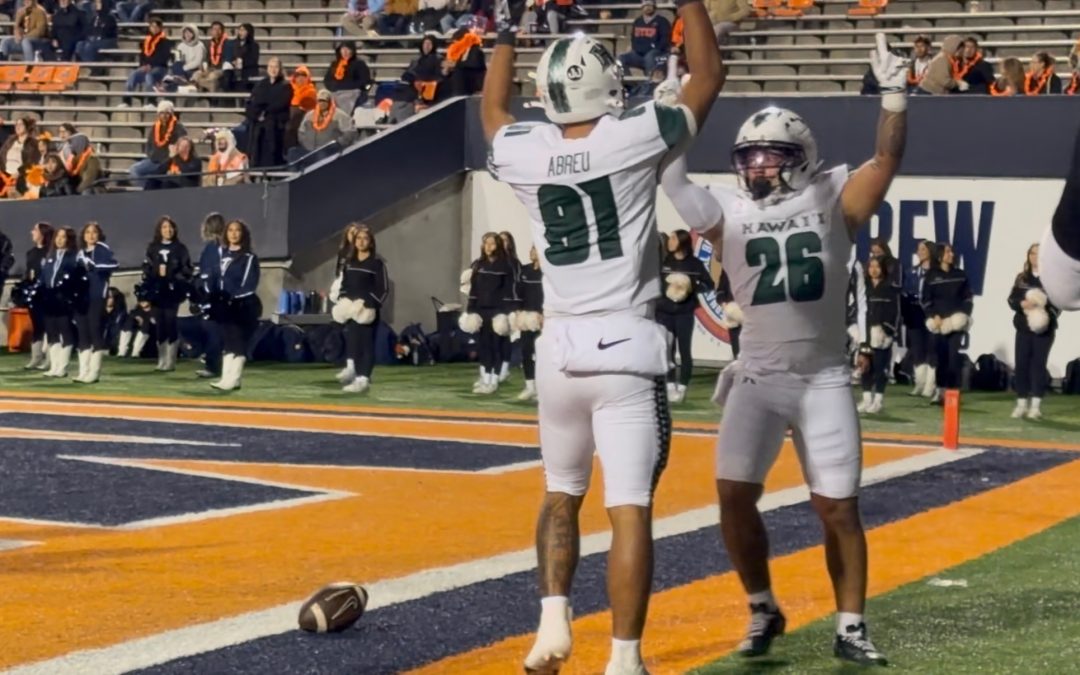
Hawai‘i Looks to Build Momentum Against UTEP Following Bye Week

Hawai‘i Looks to Build Momentum Against UTEP Following Bye Week

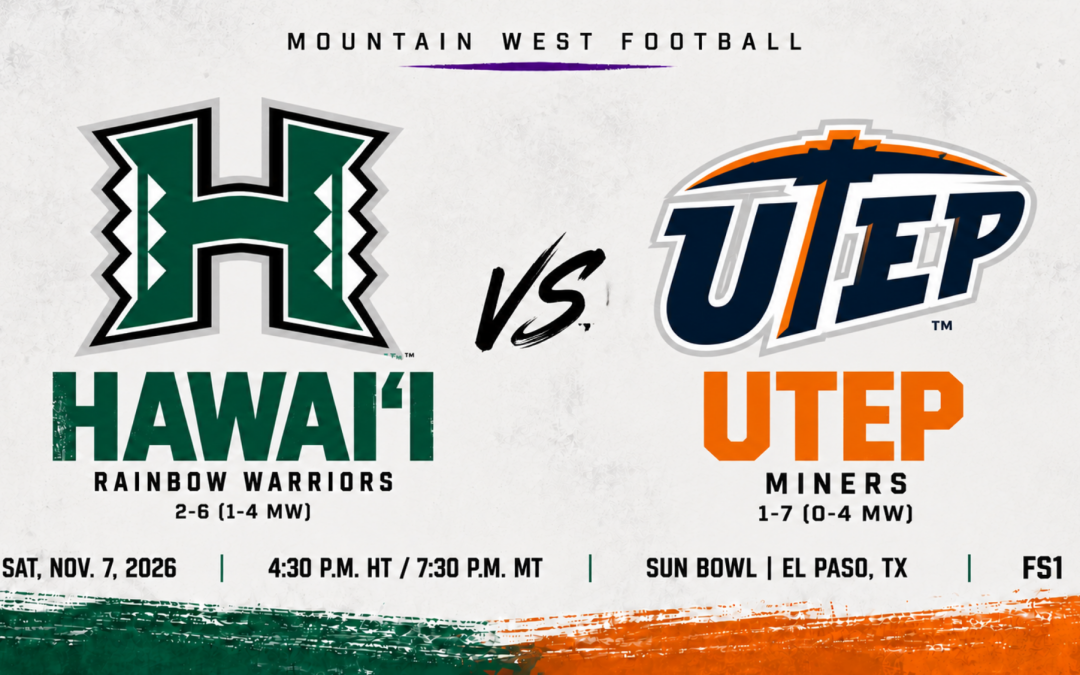
Rainbow Warriors seek consecutive wins for the first time this season as former WAC rivals meet for the first time in 22 yearsComing off its most complete performance of the season and a much-needed bye week, Hawai‘i returns to action Saturday...

ADVERTISEMENT
UH’s Voice on NIL: House Advances HB 2384 Following Campus Hearing

UH’s Voice on NIL: House Advances HB 2384 Following Campus Hearing

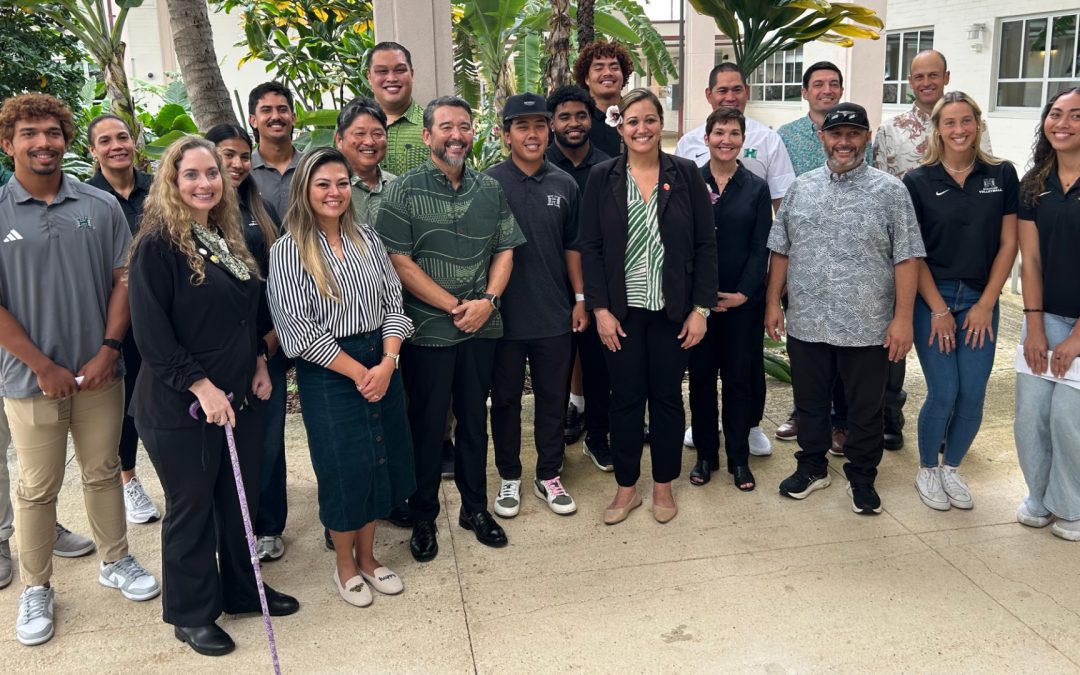
House lawmakers pose with UH Athletics Director Matt Elliott, President Wendy Hensel, coaches and student-athletes following an on-campus hearing for HB 2384, a bill addressing NIL and the future of UH Athletics.

UH’s Voice on NIL: House Advances HB 2384 Following Campus Hearing

BY HSRN STAFF | HONOLULU
PUBLISHED FEBRUARY 12, 2026

MĀNOA — The conversation around Name, Image and Likeness (NIL) moved forward Wednesday afternoon — and this time, it happened on campus.

The Hawai‘i House Committee on Higher Education held its hearing on HB 2384 inside Bachman Hall at the University of Hawai‘i at Mānoa, bringing lawmakers face-to-face with the student-athletes and coaches most impacted by the bill.

By the end of the hearing, the committee voted to pass the measure as an amended HD1, keeping the appropriation blank to allow further discussion.

But beyond the vote, the day was defined by testimony — and the urgency behind it.


What HB 2384 Does

HB 2384 would:

  • Affirm student-athletes’ rights to earn compensation through NIL

  • Require UH to adopt NIL policies aligned with federal law and Title IX

  • Establish reporting and transparency standards

  • Provide education and protection for student-athletes

  • Appropriate funding (amount to be finalized)

  • Sunset in 2030

The bill addresses both regulatory structure and potential state funding support for NIL programs.

“This Is the New Normal”

UH Athletics Director Matt Elliott made clear that this conversation is about adapting — not reacting.

He told lawmakers that every Mountain West Conference school now has an NIL budget and that NIL discussions are happening during official recruiting visits. He emphasized that NIL “is here” and that Hawai‘i must create a plan rather than risk falling behind.

Elliott explained that UH is currently raising private funds for this fiscal year (July 1, 2025 – June 30, 2026) and has requested $5 million for the 2026–27 fiscal year to provide stability and certainty in recruiting and retention. The goal, he said, is to run a balanced budget while ensuring UH can compete in the evolving landscape.

Student-Athletes: Pride, Culture and Staying Home

Much of the hearing’s impact came from the student-athletes themselves.

Wahine basketball guard Jovi Lefotu described UH athletics as representing “home, the Polynesian culture and the community,” explaining how the support she received while recovering from two ACL injuries reinforced why she chose to stay in Hawai‘i. She said knowing the community invests in their journey gives athletes confidence to deliver championships for the state.

UH quarterback Micah Alejado spoke about the pride that comes with “putting the H on the chest,” noting that culture is the most important foundation programs can build in today’s college environment. At the same time, he acknowledged that “the college landscape is changing” and that programs must adjust accordingly.

Baseball infielder Elijah Ickes addressed the realities of the transfer portal, explaining how difficult it is to build long-term chemistry when teammates leave after a year. He said the goal is to retain players, build bonds and ultimately compete at the highest level.

For many athletes, NIL wasn’t framed as “extra money,” but as a tool that helps Hawai‘i retain local talent and stay competitive nationally.

Coaches: Opportunity Must Continue

Head football coach Timmy Chang tied the bill directly to recruiting and retention, telling lawmakers that in recruiting and building culture, HB 2384 is important to sustaining the program’s momentum.

Rainbow Wahine volleyball head coach and former UH setter Robyn Ah Mow spoke emotionally about how UH athletics changed her life and opened doors she otherwise would not have had. She told lawmakers that college athletics is different now and that Hawai‘i must remain competitive to continue offering those same opportunities to future generations.

Former UH football player Mike Iosua provided perspective from both eras of college sports, noting that in the past athletes couldn’t accept even minor benefits without NCAA violations. Today, he said, NIL is no longer a “nice to have,” but a “must have” in order to remain competitive.

Lawmakers Frame It as Investment

Committee Chair Rep. Andrew Takuya Garrett said the decision to hold the hearing on campus was intentional, allowing lawmakers to hear directly from student-athletes and coaches.

While acknowledging concerns about taxpayer dollars, Garrett described the proposal as an investment that brings a return to the community.

Several members noted that UH Athletics serves as Hawai‘i’s only Division I program and plays a role in workforce development, community pride and economic impact.


How This Fits With SB 3263

HB 2384 is not the only NIL measure moving through the Legislature this session.

The Senate is advancing SB 3263, which also addresses student-athlete NIL rights and oversight, though with structural differences in funding mechanisms and reporting requirements. Lawmakers have indicated that both bills will likely continue through the process before being reconciled later in session.

For a deeper breakdown comparing HB 2384 and SB 3263 side-by-side, read our full comparison post here.


What Happens Next

HB 2384 now advances through the legislative process, with further hearings and potential crossover to the Senate ahead.

Funding details and the effective date will likely be addressed in later stages of the session.

What Wednesday made clear is that for student-athletes, coaches and administrators, NIL is no longer theoretical. It is part of daily recruiting, retention and roster decisions.

As Elliott put it, the goal is not to overspend or chase trends, but to create a responsible, transparent framework that allows UH to compete while protecting its athletes.

The debate now shifts to the broader Legislature — but at Mānoa, the message was consistent:

Hawai‘i wants to compete.

And it wants to do so together.

Hawai‘i Looks to Build Momentum Against UTEP Following Bye Week

Hawai‘i Looks to Build Momentum Against UTEP Following Bye Week

Rainbow Warriors seek consecutive wins for the first time this season as former WAC rivals meet for the first time in 22 yearsComing off its most complete performance of the season and a much-needed bye week, Hawai‘i returns to action Saturday...

ADVERTISEMENT